 EN
EN
 English
  简体中文
简体中文  Italian
  Spanish
  Turkish
  Japanese
  Portuguese
  Russian
  French
  German
  Polish
  Persian
  Arabic
 News
Latest news, updates & insights from Fushi.
Latest news, updates & insights from Fushi.
May 21, 2026Source:Intelligent Browse: 240
For many years, traditional two-way radios were the standard communication tool for field teams. They were simple, direct, and useful in many controlled environments. However, as field operations become more digital, many teams now need more than voice communication. They need real-time data, location services, app access, scanning capability, mobile reporting, and wider network coverage.
This is one reason why the 4G Fully Rugged Walkie Talkie is gradually replacing traditional radios in logistics, public safety, transportation, warehousing, utilities, and industrial field operations.
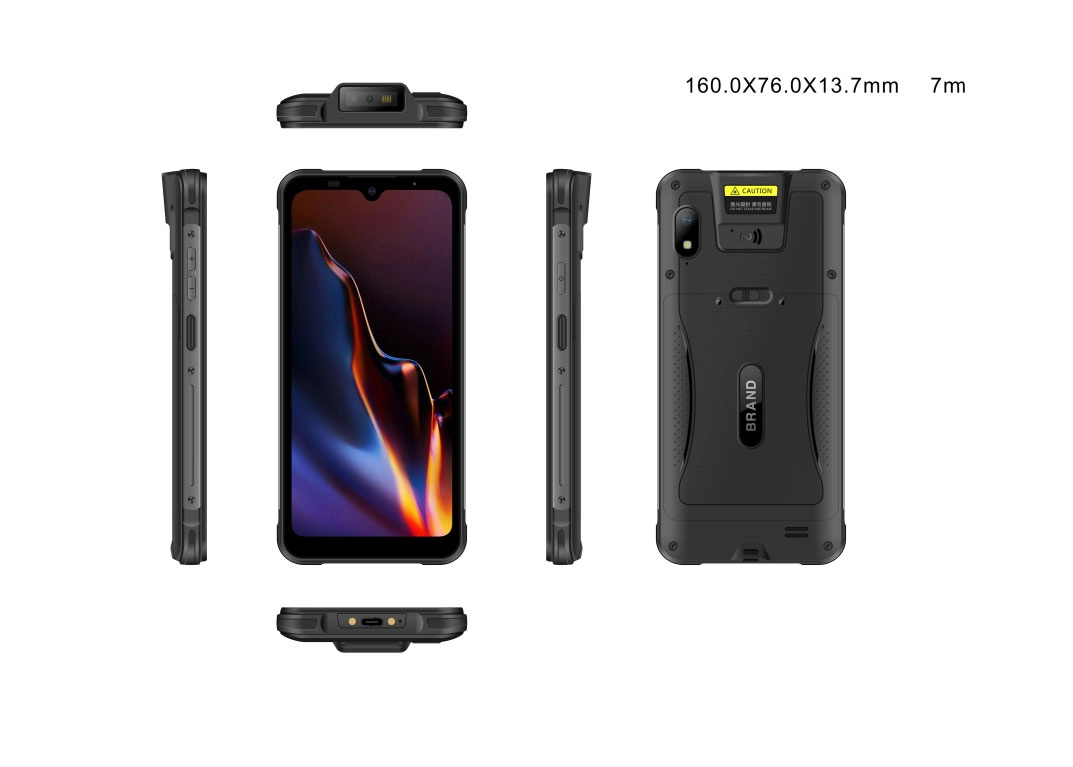
Unlike a conventional radio, a rugged 4G walkie talkie combines push-to-talk communication, Android smart terminal functions, mobile network connectivity, rugged protection, and data collection capability in one device. For teams that work outside the office, this creates a more practical communication platform.
Traditional radios are still useful for short-range voice communication, but many industrial teams now face more complex tasks.
A warehouse worker may need to scan codes, update inventory, receive dispatch instructions, and communicate with supervisors. A logistics driver may need GPS navigation, real-time route updates, and instant communication. A utility inspection team may need to upload photos, record field data, and stay connected across different regions.
In these situations, a voice-only radio can become limiting.
Common limitations include:
This is why many companies are moving toward public network intercom devices based on 4G communication.
One major advantage of a 4G fully rugged walkie talkie is network coverage.
The FUSHi TECH device supports multiple network modes, including GSM, CDMA, WCDMA, EVDO, TD-SCDMA, TDD-LTE, and FDD-LTE. With LTE CAT4 capability, it supports theoretical rates up to 150Mbps downlink and 50Mbps uplink, which is enough for voice communication, data transfer, app usage, photo uploads, and field reporting.
For practical industrial use, this means field teams are no longer limited by short-distance radio coverage. As long as mobile network service is available, communication can continue across cities, warehouses, industrial parks, highways, ports, and remote work locations.
This is especially valuable for:
The result is wider communication range and stronger flexibility compared with traditional radio systems.
A key function of modern rugged walkie talkies is public network intercom. Instead of relying only on traditional radio frequency systems, these devices can support POC intercom software from telecom operators and software providers.
This creates several practical advantages.
Teams can use push-to-talk communication over mobile networks. Dispatch centers can manage groups more easily. Different teams can be assigned to different channels or work groups. Managers can communicate with field workers across wider geographic areas.
For companies operating in multiple sites, this is more flexible than setting up independent radio infrastructure for each location.
Public network intercom is particularly useful for:
The communication model is closer to modern enterprise workflow, not just short-range voice transmission.
Another major difference is the operating system.
The device runs Android 15, making it suitable for modern mobile applications. This allows companies to install business apps, inspection platforms, warehouse management tools, fleet dispatch systems, and custom enterprise software.
A traditional radio can only transmit voice. A rugged Android walkie talkie can support:
This turns the device into a rugged smart terminal, not only a communication tool.
For industrial buyers, this is a major reason to upgrade. One device can replace several tools, reducing the need to carry a radio, smartphone, scanner, and GPS device separately.
Field communication devices are often used in demanding environments. They may be dropped, exposed to rain, used in dusty sites, carried during patrols, or operated in vehicles.
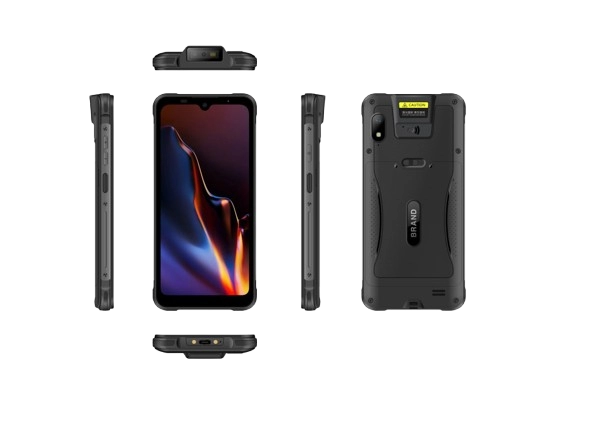
The FUSHi TECH rugged walkie talkie features a fully rugged design and supports IP67 waterproof and dustproof protection, as well as professional shockproof performance. It also supports glove operation and gesture control through a capacitive 5-point touch screen.
This matters because field workers need devices that remain usable in real conditions, not only in clean office environments.
Common usage environments include:
For these teams, rugged protection is not an optional feature. It directly affects daily communication reliability.
Modern industrial communication is closely connected with data collection.
This device can support a dedicated scanning head, including CM30 or E60 options, and optional RFID modules for US and European frequency versions. It also supports NFC at 13.56MHz with ID card recognition.
These features make it useful for more than voice communication.
For warehouse and logistics teams, scanning and RFID can support:
For public service and industrial inspection teams, NFC and scanning functions can support identity confirmation, patrol point check-in, and work order verification.
This is one of the biggest differences from traditional radios. A rugged 4G walkie talkie can connect communication with operational data.
The device supports GPS, Beidou, GNSS, GLL, and AGPS navigation. For field operations, location capability is extremely important.
Dispatch managers may need to know where workers are, which vehicle is closest to a task, or whether a patrol route has been completed. Logistics teams may need route tracking. Utility maintenance teams may need location records for inspection work.
With positioning support, a rugged communication device becomes part of a broader dispatch and management system.
This can improve:
Traditional radios can support voice communication, but they usually cannot provide the same level of location-based workflow support.
The 6.088-inch waterdrop screen provides more display space than conventional walkie talkies. With 1560 × 720 resolution and a high-definition hard screen, workers can view apps, maps, messages, inspection forms, and photos more clearly.
The device also includes:
These functions make the device suitable for daily field use, especially where workers need fast operation and reliable communication.
4G fully rugged walkie talkies are not limited to one industry. Their value comes from combining communication, smart terminal functions, and rugged design.
Typical applications include:
For driver communication, fleet dispatch, route coordination, delivery confirmation, and package tracking.
For barcode scanning, inventory control, staff communication, and task assignment.
For patrol communication, emergency response, location tracking, and field reporting.
For maintenance coordination, production support, equipment inspection, and site communication.
For GPS-based inspection, photo reporting, work order updates, and long-distance team communication.
In each case, the device helps teams move from simple voice communication to connected field operations.
Traditional radios are not disappearing completely, but their role is changing.
For simple short-range voice use, they still have value. But for teams that need digital workflows, app integration, remote dispatch, GPS, scanning, and wider communication coverage, rugged 4G devices are becoming the better option.
A 4G fully rugged walkie talkie offers:
This is why more industrial buyers are treating rugged walkie talkies as part of their digital operation systems.
The shift from traditional radios to 4G fully rugged walkie talkies reflects a larger change in field communication. Modern teams do not only need to talk. They need to collect data, receive tasks, confirm locations, scan assets, upload information, and stay connected across wider areas.
For industrial, logistics, public safety, and field service teams, a rugged 4G walkie talkie provides a more complete communication and data platform.
FUSHi TECH focuses on rugged smart devices and industrial mobile solutions, supporting customers that need reliable communication tools for demanding work environments. For companies upgrading from traditional radios, a 4G fully rugged walkie talkie can be a practical step toward more efficient, connected, and manageable field operations.