 EN
 English
 简体中文
 Italian
 Spanish
 Turkish
 Japanese
 Portuguese
 Russian
 French
 German
 Polish
 Persian
 Arabic
News
Latest news, updates & insights from Fushi.
Latest news, updates & insights from Fushi.
Oct 22, 2026Source:Intelligent Browse: 4
For field teams working across industrial sites, outdoor locations, and mobile service environments, battery planning can make a real difference to daily productivity. The RT-10RA 10-inch Android 14 rugged tablet combines a detachable 4300mAh battery with rugged protection, flexible connectivity, and expandable hardware options to support mobile work where convenient access to charging is not always available.
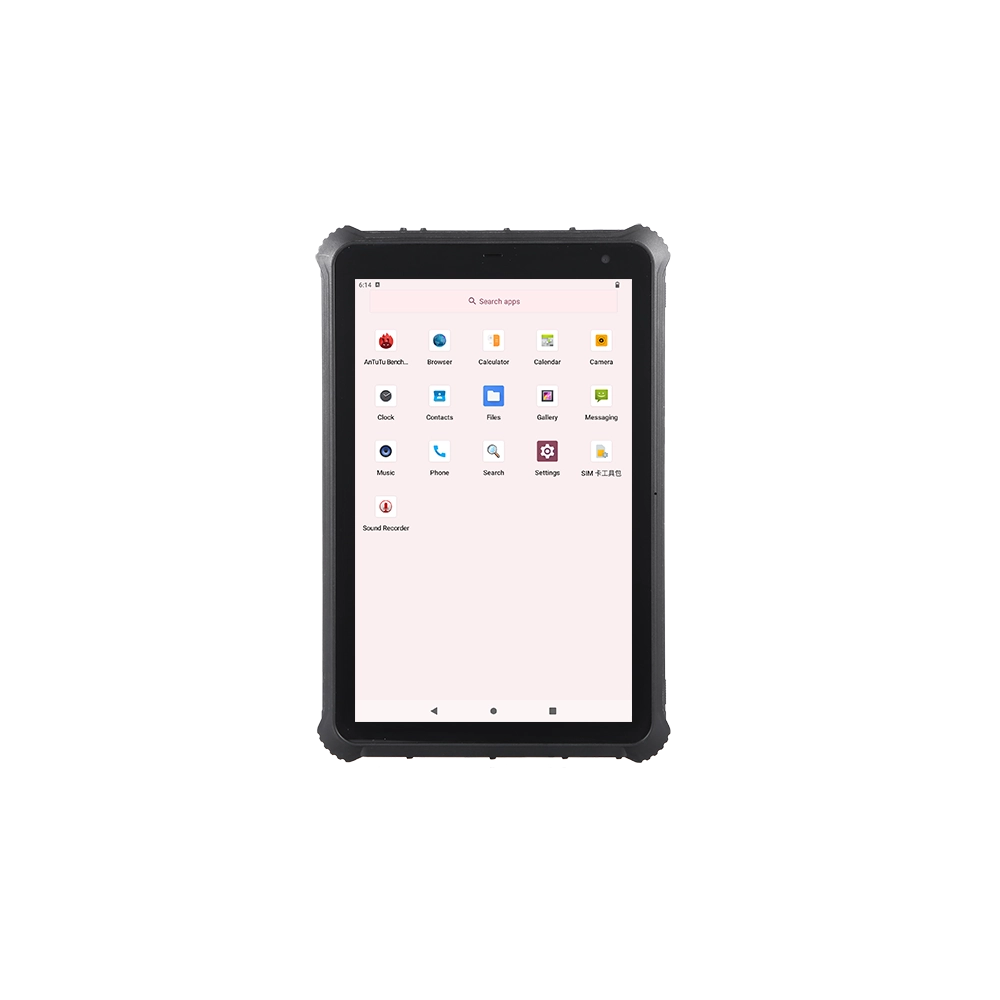
In many industrial environments, workers cannot return to a charging station whenever a device runs low on power. Maintenance technicians may move between equipment areas, outdoor inspection teams may cover large sites, and vehicle operators may spend hours away from their base. If a tablet shuts down during an inspection or data entry task, workers may need to interrupt their work, find a charging point, or repeat steps after restarting the device.
Battery planning is therefore about more than choosing a device with a large capacity. Organizations also need to consider daily operating hours, application workload, wireless connectivity, screen brightness, access to spare batteries, and the time required to recharge equipment.
The RT-10RA addresses part of this challenge with a detachable polymer lithium-ion battery rated at 7.6V and 4300mAh. Its removable design gives organizations more flexibility when planning power for mobile teams, particularly when carrying a charged spare battery is more practical than waiting for the installed battery to recharge.
The RT-10RA uses a 7.6V, 4300mAh detachable battery. Its specified battery life is approximately six hours under a defined test condition: local 1080P HD video playback at 50% volume.
This figure provides a useful reference point, but it should not be interpreted as a guaranteed six-hour runtime under every working condition. Actual battery life can vary considerably depending on how the tablet is used.
For example, a device mainly used for digital forms and occasional data entry may have a different power consumption profile from one continuously displaying maps, capturing photographs, transferring records over a mobile network, or running demanding applications. Screen brightness can also affect endurance, particularly when workers need a high-brightness display outdoors.
Before deploying the tablet across an entire team, buyers should test the battery under a representative workload. A practical evaluation can include the applications workers use most frequently, expected Wi-Fi or cellular activity, positioning requirements, screen settings, and the duration of a typical shift.
This approach helps organizations estimate how many charging opportunities or spare batteries they may need without relying solely on laboratory-style playback figures.
A detachable battery provides an additional power-management option for teams that cannot always stop working to charge their equipment.
Consider a maintenance team conducting inspections across several buildings or production areas. Workers may need to review equipment records, take photographs, complete digital checklists, and submit reports before moving to the next location. If a battery approaches a low charge level, having a compatible, fully charged spare available can make it easier to maintain the planned workflow.
The same principle applies to outdoor patrols, field service, and remote site inspections. Instead of relying entirely on access to wall outlets, supervisors can establish a battery rotation procedure based on expected operating hours and the team's charging facilities.
However, a detachable battery should not automatically be treated as a hot-swappable battery. Unless the manufacturer confirms that the device supports battery replacement while powered on, workers should follow the recommended shutdown and replacement procedure. They should also use compatible batteries and approved charging equipment.
For the RT-10RA, buyers planning extended shifts should confirm spare battery availability, replacement procedures, and charging accessories with the supplier before deployment.
A battery rotation plan helps prevent avoidable downtime and gives supervisors a clearer view of equipment readiness.
First, estimate the actual runtime required for each role. A technician using the tablet intermittently may have different needs from an inspector who keeps the display active throughout the shift. Grouping users by workload makes it easier to establish realistic battery requirements.
Second, identify when charging is possible. Some teams can recharge devices during scheduled breaks, while others work in vehicles, remote facilities, or locations with limited access to electrical outlets. The availability of charging facilities should influence how many spare batteries are prepared.
Third, label and track batteries. A simple record of charging status, issue time, replacement time, and battery condition can help supervisors identify recurring problems. Batteries that no longer provide adequate operating time should be assessed and replaced according to the manufacturer's guidance.
Finally, test the complete process before large-scale deployment. Confirm that spare batteries can be transported safely, charging equipment is available where needed, and workers understand the replacement procedure. A well-organized rotation process is often more useful than relying on informal arrangements between team members.
Battery flexibility is only one part of a reliable mobile computing setup. The RT-10RA also provides features intended for demanding work environments.
Its IP67 protection rating and specified 1.2-meter drop resistance test on a composite wood floor are relevant to teams working around dust, moisture, and accidental handling risks. The device has a stated operating temperature range of -20°C to 60°C, making it suitable for consideration in a range of industrial and outdoor applications, subject to the manufacturer's operating instructions.
The 10-inch LCD is available with 800 × 1280 or 1200 × 1920 resolution options. Buyers can select 500, 800, or 1000 nits of brightness according to their display requirements. Higher brightness may improve readability in bright surroundings, although it can also increase power consumption.
The tablet runs Android 14 and uses an RK3588 octa-core processor with a stated maximum main frequency of 2.4GHz. Available memory and storage configurations include 8GB RAM with 128GB or 256GB storage, and 16GB RAM with 256GB storage. Expandable SSD options are also listed, ranging from 128GB to 2TB.
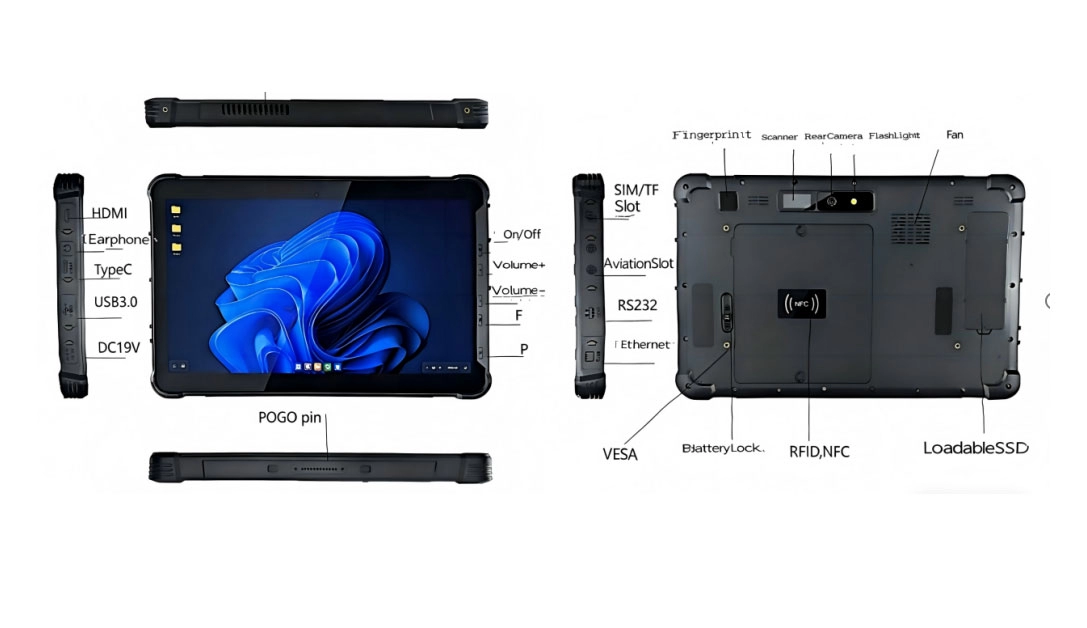
For connected workflows, the device supports Wi-Fi and Bluetooth 5.3 BLE, with optional 4G or 5G connectivity. Its interfaces include USB-A, USB-C, Mini HDMI, Gigabit Ethernet, a SIM slot, a TF card slot, and a 12-pin pogo pin connector. Optional modules such as RFID, fingerprint recognition, barcode scanning, and customized positioning solutions may also be available, depending on the required configuration.
These features allow buyers to assess the tablet as part of a complete field-work system rather than evaluating battery capacity in isolation.
In factory maintenance, technicians may use the tablet to access equipment information, document faults, and record completed service tasks. A planned spare battery can help reduce interruptions when charging access is limited.
Outdoor inspection teams may need to collect location information, take photographs, and submit records while moving between checkpoints. In these situations, expected screen-on time and wireless usage should be included in battery planning.
Vehicle-based teams may also benefit from a removable battery, especially when their work involves frequent stops and changing locations. However, organizations should separately confirm vehicle power requirements, mounting arrangements, and charging compatibility rather than assuming that the removable battery alone will meet every operational need.
For medical, energy, automation, and other industrial applications, the appropriate battery strategy depends on the software, peripherals, work schedule, and environmental conditions involved. Each deployment should be tested against its own requirements.
Selecting a rugged tablet for extended shifts requires a clear understanding of how the device will be used after it leaves the office. Buyers should evaluate battery endurance alongside environmental protection, connectivity, display requirements, and peripheral compatibility.
Fushizk Technology Co., Ltd. is a Shenzhen-based technology company established in 2021, specializing in rugged computing tablets and integrating research and development, production, and sales. Its product portfolio includes Android and Windows rugged tablets, vehicle-mounted models, medical tablets, and other specialized devices.
The company reports more than 50 patent applications and annual research and development investment exceeding 15% of its resources. Its technical focus includes embedded system development, AI algorithm optimization, and wireless communication technology.
For organizations considering the RT-10RA, it is worth discussing the expected shift length, real-world application workload, spare battery requirements, charging arrangements, and any customized hardware options with the supplier before placing an order.
A detachable battery creates useful flexibility, but the best results come from combining the right hardware configuration with a realistic operating plan. By testing runtime under actual workloads and establishing a clear battery rotation process, businesses can make better-informed decisions about supporting their mobile teams throughout the working day.