 EN
EN
 English
  简体中文
简体中文  Italian
  Spanish
  Turkish
  Japanese
  Portuguese
  Russian
  French
  German
  Polish
  Persian
  Arabic
 News
Latest news, updates & insights from Fushi.
Latest news, updates & insights from Fushi.
Aug 11, 2026Source:Intelligent Browse: 66
Deploying tablets across industrial and field environments is different from choosing devices for ordinary office use. A field tablet may need to run business applications for long periods, connect to different networks, collect location data, communicate with external equipment, and remain usable in dust, moisture, sunlight, and changing temperatures.
The operating system is an important part of that deployment. While rugged hardware protects the device from the environment, the operating system determines how applications run and how the tablet fits into an organization's digital workflow. For businesses looking at Android rugged tablets, Android 13 provides a modern platform for deploying applications on compact devices.
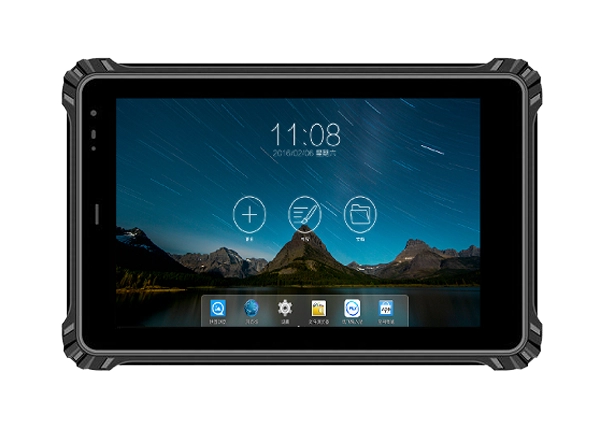
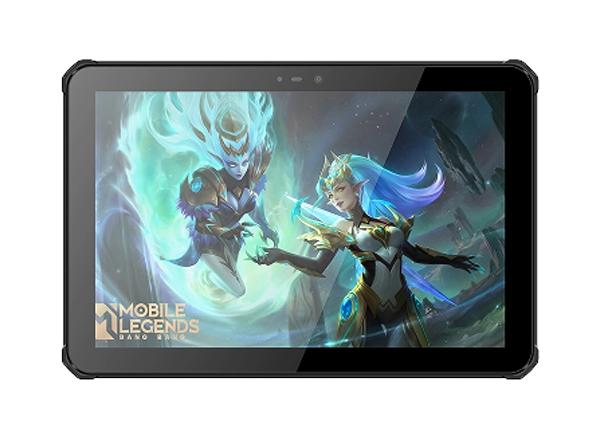
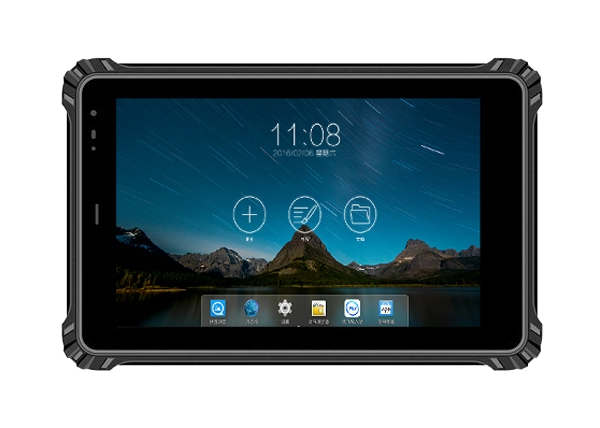
The RT-08MG 8-inch Android13 Rugged Tablet combines Android 13 with an 8-inch display, multi-network communication, positioning capabilities, expandable storage, optional data collection modules, and IP67 protection. This combination makes it suitable for organizations that need a compact Android platform rather than a consumer tablet placed inside a rugged enclosure.
A rugged tablet may remain in service for several years, so software compatibility matters from the beginning of a deployment. If a tablet is based on an older operating system, businesses may face limitations when introducing newer applications or updating their existing software environment.
The RT-08MG runs Android 13, giving developers and system integrators a current Android environment for applications used in mobile operations. This is particularly useful when the tablet needs to run customized applications rather than only basic office software.
For example, a company may deploy an Android application that combines inspection forms, equipment information, photographs, positioning data, and network synchronization. The tablet becomes a mobile terminal for the company's existing system instead of functioning as an isolated device.
This approach also makes the choice of hardware and software more closely connected. Businesses can first define their application requirements, then select the appropriate memory, communication, positioning, scanning, or identification modules for the tablet deployment.
Operating system capability alone does not determine whether a tablet is suitable for field deployment. Physical size is also important.
A tablet used by technicians, inspectors, warehouse personnel, or service teams may be carried between multiple locations every day. A device that is too large can be inconvenient, particularly when workers need to operate it while standing, walking, or handling equipment.
The RT-08MG uses an 8.0-inch LCD display and has dimensions of 226 × 145 × 21.8 mm, with a weight of approximately 760 g. This provides a usable screen for Android applications while keeping the device relatively compact for mobile work.
The display is available in 800 × 1280 or 1200 × 1920 resolution configurations, with brightness options of 500, 800, or 1000 nits. For deployments involving outdoor work, the higher-brightness configuration can make application interfaces, digital forms, maps, and equipment records easier to view.
The 10-point capacitive touch panel has 7H hardness. Anti-glare, glove-touch, and wet-hand-touch configurations can also be customized for specific working environments.
This matters during deployment because the device configuration can be matched to the actual working conditions rather than forcing every project into the same hardware setup.
An Android application is only as useful as its ability to communicate with the systems around it.
In a warehouse, for example, an application may need to connect to a local Wi-Fi network. A field technician may rely on cellular connectivity instead. A maintenance application may communicate with nearby equipment through Bluetooth, while a location-based application requires GNSS information.
The RT-08MG supports Wi-Fi 802.11a/b/g/n/ac, 2.4G and 5.8G wireless networks, Bluetooth 5.3, and 2G/3G/4G cellular communication. The product configuration also supports GPS, Beidou, Galileo, and GLONASS, with three of the four positioning systems available according to configuration.
This gives system integrators several ways to build connectivity into the deployment.
For example, a field application can use cellular communication when technicians are working away from company facilities. Wi-Fi can be used when they return to a depot or connect to a local network. Bluetooth can support short-range connections to compatible accessories.
The available cellular bands should still be checked against the target country's network requirements before a large deployment.
Enterprise tablet projects rarely have identical requirements. One customer may only need a touchscreen and camera, while another may require RFID, barcode scanning, identification, or high-precision positioning.
This is where configurable rugged hardware becomes valuable.
The RT-08MG provides optional modules including GNSS with Beidou/RTK high-precision positioning, fingerprint recognition, NFC/HF/LF, UHF RFID, offline ID card functionality, and 1D/2D barcode or QR code scanning.
Consider an equipment management application. Instead of asking a worker to manually type an asset number, the tablet could use a barcode scanner, NFC interface, or UHF RFID module to identify the equipment. The Android application can then retrieve the corresponding digital record.
Similarly, a field measurement or infrastructure application may benefit from the optional RTK positioning configuration. In this case, positioning is not simply a navigation feature; it can become part of the data collected by the Android application.
This type of hardware-software integration is one reason Android rugged tablets are useful in specialized deployments.
A modern field application often combines several types of information.
A technician may scan an equipment code, record a maintenance result, take photographs, obtain the current position, and upload the completed record. Requiring separate devices for each step adds equipment and complicates the workflow.
The RT-08MG has a 5MP front camera and 13MP rear autofocus camera with LED light. Combined with cellular communication, GNSS, scanning modules, and expandable storage, these functions allow different forms of field information to be handled from one device.
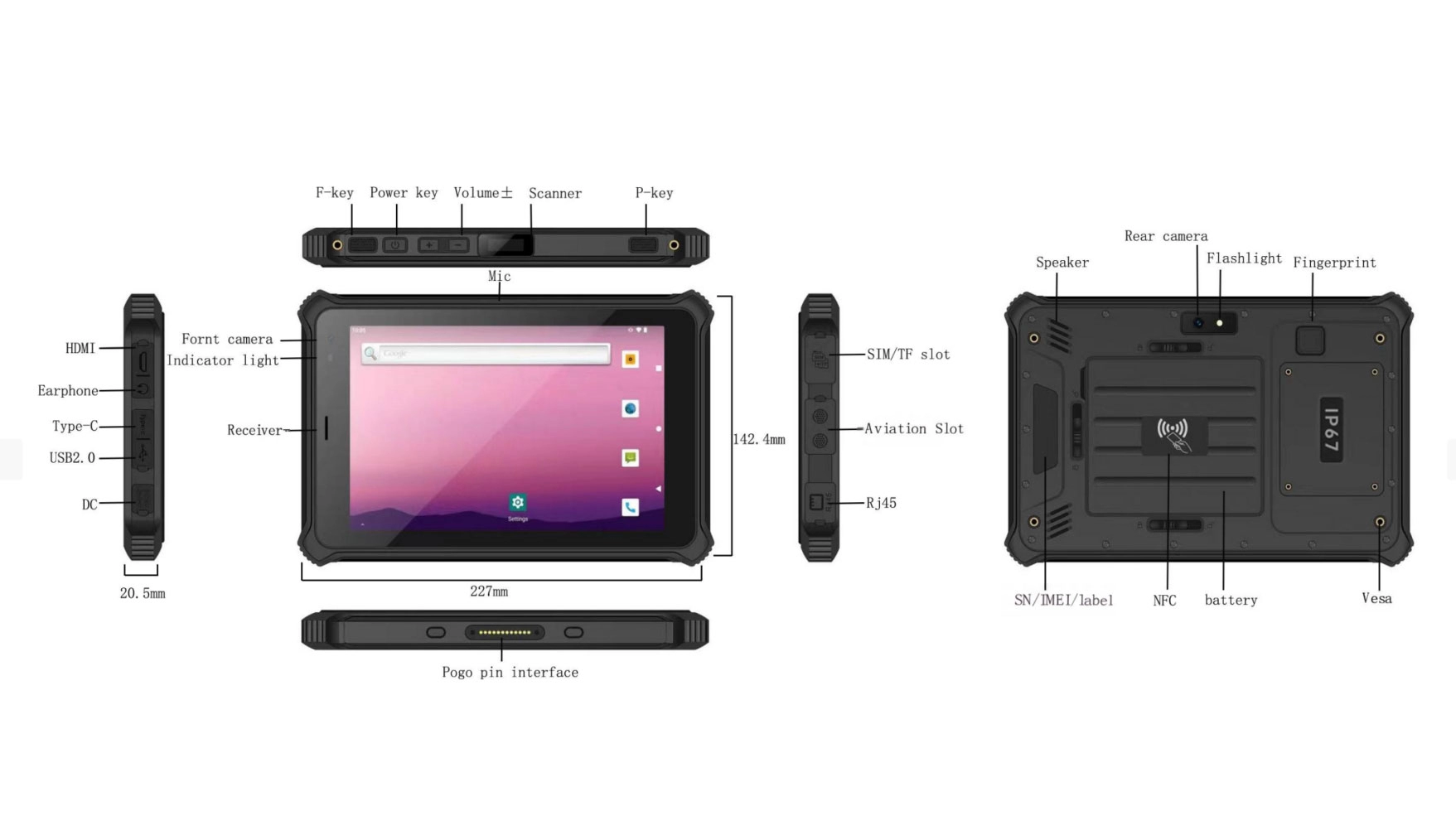
The tablet also provides USB Type-A, USB Type-C, a 100 Mbps network port, audio interface, DC input, and a 12-pin pogo pin. A SIM card slot is included, while the TF card slot supports storage expansion up to 1TB.
For system integrators, these interfaces provide additional options when connecting the tablet to peripherals or building customized docking and accessory solutions.
Software performance is important, but a tablet that cannot remain operational during a field shift creates an immediate practical problem.
The RT-08MG uses a built-in 3.8V 10000mAh polymer lithium-ion battery. Under the stated test condition of 50% volume and 1080P local high-definition video playback, battery life is approximately 10 hours. Actual runtime will depend on screen brightness, cellular communication, GPS usage, application load, and other operating conditions.
For field deployment, the large battery capacity can help reduce interruptions caused by frequent charging.
Environmental protection is equally important. The tablet has an IP67 protective rating and a stated 1.2-meter drop resistance on a composite wood floor. Its operating temperature range is -20°C to 60°C, with a storage temperature range of -30°C to 70°C.
These specifications are relevant when Android applications are being deployed in outdoor inspection, energy, transportation, industrial maintenance, or other environments where standard consumer tablets may not be appropriate.
Choosing an Android 13 rugged tablet should start with the application workflow rather than the operating system alone.
Businesses should first determine how workers will use the device. If the primary task is form entry, the display and touch configuration may be the main considerations. If workers need to identify assets, NFC, UHF, or barcode scanning may become more important. For location-sensitive applications, GNSS or RTK may be required.
Network requirements should also be defined before purchasing. Wi-Fi may be sufficient for controlled facilities, while mobile teams may require 4G connectivity. Projects involving multiple countries should verify supported LTE bands for each deployment region.
The physical environment should also influence the configuration. Outdoor users may benefit from a 1000-nit display, anti-glare touch functionality, and IP67 protection. Cold or hot environments should be evaluated against the stated operating temperature range.
This approach helps prevent a common deployment problem: buying a rugged tablet with many specifications that do not actually support the organization's workflow.
Android 13 is only one part of a successful rugged tablet project, but it provides the software foundation for deploying modern Android applications. The greater value comes when the operating system is combined with hardware designed around the actual requirements of field work.
Fushizk Technology Co.,Ltd focuses on rugged computing products and integrates R&D, production, and sales. Its product range includes Android and Windows rugged tablets, explosion-proof rugged tablets, vehicle-mounted rugged tablets, medical rugged tablets, and military-grade reinforced tablets.
The company has developed technical capabilities in embedded system development, AI algorithm optimization, and wireless communication technology. It has applied for more than 50 patents, with annual R&D investment exceeding 15%, supporting its focus on customized and application-oriented rugged computing solutions.
For companies planning an Android tablet deployment, the RT-08MG 8-inch Android13 Rugged Tablet offers a combination of Android 13, compact dimensions, multiple communication options, precise positioning support, expandable storage, optional data collection modules, long battery endurance, and IP67 protection.
The most effective deployment is not necessarily the tablet with the longest specification list. It is the configuration that matches the application's data, connectivity, positioning, interface, and environmental requirements. By selecting those elements together, businesses can build a more practical Android rugged tablet solution for long-term field use.