 EN
EN
 English
  简体中文
简体中文  Italian
  Spanish
  Turkish
  Japanese
  Portuguese
  Russian
  French
  German
  Polish
  Persian
  Arabic
 News
Latest news, updates & insights from Fushi.
Latest news, updates & insights from Fushi.
Aug 18, 2026Source:Intelligent Browse: 72
Field inspection is often a mobile job. A technician may need to walk through a production area, inspect equipment outdoors, check an asset ID, take photos, record findings, and send the results to a central system. When these steps are handled with separate devices, the workflow becomes slower and data can be missed or entered incorrectly.
A connected rugged tablet provides a more practical approach. It gives field personnel one device for inspection software, asset identification, communication, positioning, image capture, and data entry. The combination becomes particularly useful when inspection work takes place in environments where ordinary consumer tablets are not designed to operate.
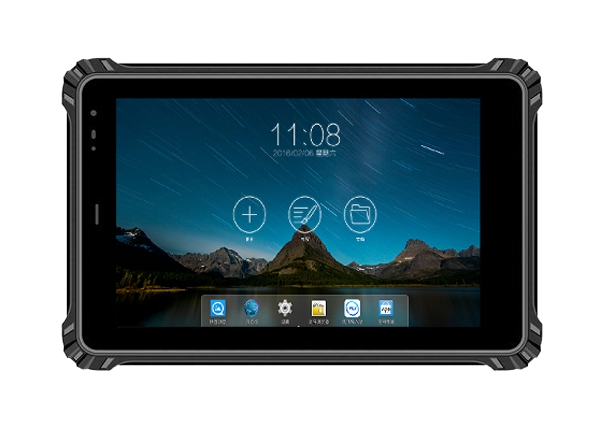
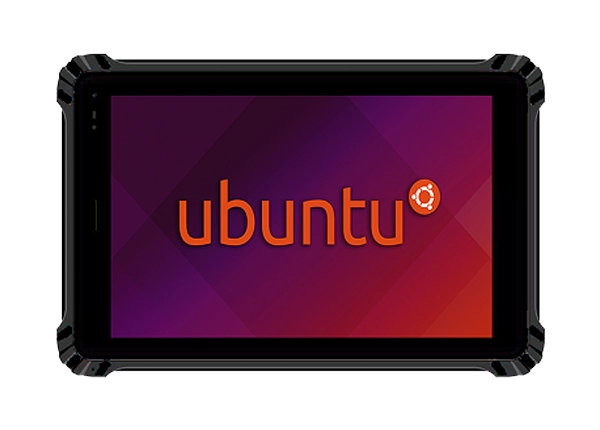
The RT-08X 8-inch Android15 Rugged Tablet is designed around this type of workflow. It combines Android 15 with an eight-core MTK6789 processor, wireless communication, GPS and optional GNSS capabilities, a high-capacity battery, multiple identification modules, and IP67 protection. These features make it suitable for inspection tasks where mobility and connectivity are equally important.
One of the first problems in field inspection is making sure the technician is checking the correct equipment.
Large facilities may contain hundreds or thousands of machines, electrical cabinets, vehicles, pipelines, meters, or other assets. Relying on manual asset-number entry can create unnecessary errors, particularly when several assets have similar names or are located close together.
The RT-08X supports optional 1D/2D scanning modules as well as NFC, HF/LF, and UHF RFID functions. UHF options include PR9200 with a stated reading distance of approximately 3–5 meters and R2000 with a stated distance of approximately 10–15 meters, depending on the selected configuration and operating environment.
This allows the inspection workflow to begin with asset identification rather than manual typing.
For example, a technician can approach an equipment area, scan the asset code, retrieve the corresponding inspection record, and then begin checking the required points. If RFID or NFC is used, the identification process can be integrated into a tag-based asset management workflow.
This is particularly useful for equipment fleets, warehouses, utility facilities, manufacturing plants, and other locations where accurate asset identification matters.
Inspection information is more useful when it reaches the right system quickly.
The RT-08X supports Wi-Fi using 802.11a/b/g/n/ac at 2.4GHz and 5.8GHz, along with Bluetooth 5.3. Optional 4G/5G communication can provide another connectivity option for mobile inspection teams working outside a reliable local Wi-Fi environment.
The choice of connection can depend on the deployment.
Inside a factory, Wi-Fi may be sufficient for accessing inspection software and synchronizing records. At a remote site, cellular connectivity may be more practical. Bluetooth can be used with compatible nearby devices or accessories.
This means the inspection application can be designed around the actual working environment rather than assuming that technicians will always have access to a fixed network.
A connected workflow could involve several simple steps:
Identify the asset → open the inspection task → check equipment status → record findings → capture photos → attach location information → synchronize the report.
The hardware does not determine the software workflow by itself, but its communication options give system developers more ways to build that workflow.
Location can be an important part of an inspection record.
For fixed equipment, knowing which asset was inspected may be enough. For distributed assets, outdoor infrastructure, transportation equipment, or remote installations, it can also be useful to associate inspection activity with a geographical position.
The RT-08X supports GPS, with GPS, Beidou, Galileo, and GLONASS available as three-of-four positioning options. A customized GNSS or RTK high-precision positioning module can also be considered for applications with higher positioning requirements.
For example, an inspection application can use positioning information to help technicians confirm that they are working at the expected site. Location data can also be associated with inspection records where the software supports this function.
This can be valuable for field service teams that need to maintain a history of inspections across multiple locations rather than keeping records only by equipment number.
Inspection records often need more than a text description.
A technician may find a damaged component, corrosion, a loose connection, a cracked enclosure, a leaking area, or another condition that is difficult to describe accurately in a few words. Photographs provide additional evidence for the inspection record.
The RT-08X includes a 5MP front camera and a 13MP rear camera with autofocus and LED light. The rear camera can be useful for capturing equipment conditions while the technician is working directly at the inspection point.
A practical inspection application could allow the operator to associate photographs with the selected asset and inspection task. This makes the visual evidence easier to retrieve later during maintenance planning or follow-up work.
The camera can therefore become part of the inspection process rather than simply being an additional tablet feature.
An inspection device needs to be easy to operate while the technician is standing, walking, or working beside equipment.
The RT-08X uses an 8-inch LCD display with a standard 800 × 1280 resolution, while a 1200 × 1920 option is available. Brightness options include 500, 800, and 1000 nits.
For outdoor inspection, display brightness is an important consideration because screen visibility can change significantly under direct sunlight. A higher-brightness configuration can be selected when the application and deployment environment require it.
The 10-point capacitive touch panel has 7H hardness. Optional anti-glare, glove-touch, and wet-hand-touch configurations can also be considered for specific field conditions.
These options matter when technicians are expected to interact with inspection software while wearing gloves or working in environments where clean and dry hands cannot always be guaranteed.
Connectivity alone does not make a tablet suitable for field inspection.
Inspection work can involve dust, moisture, temperature changes, accidental drops, and frequent movement between indoor and outdoor areas. A conventional consumer tablet may not be designed around these conditions.
The RT-08X has an IP67 protection rating and a stated 1.2-meter drop resistance test on a composite wooden floor. Its operating temperature range is -20°C to 60°C, while the storage range is -30°C to 70°C. The specified humidity tolerance is up to 95% non-condensing.
These specifications can be relevant for inspection teams working in manufacturing facilities, energy sites, transportation environments, outdoor installations, and other demanding locations.
The tablet measures 226 × 145 × 21.8 mm and weighs approximately 760g. Its eight-inch format provides a compromise between screen area and portability, allowing technicians to carry the device while moving around equipment.
Inspection work can involve several hours of continuous movement, especially when a technician needs to cover a large facility or multiple equipment points.
The RT-08X uses a built-in 3.8V 10,000mAh polymer lithium-ion battery. The manufacturer specifies approximately 10 hours of battery life under a test condition using 50% volume and local 1080P high-definition video playback.
Actual operating time during inspection will depend on screen brightness, network connectivity, GPS use, scanning, camera activity, application workload, and other factors. Even so, the large battery capacity is useful when inspection teams need a device that can remain in service for extended periods without frequent charging.
For fixed inspection stations, the tablet can also be integrated with suitable accessories through its available interfaces and 12-pin Pogo Pin.
A connected inspection workflow should be designed from the software and equipment requirements first.
For example, a basic equipment inspection application may need barcode scanning, Wi-Fi, a camera, and local storage. A more advanced deployment could require UHF RFID, GPS, cellular communication, NFC, fingerprint authentication, or customized accessories.
The RT-08X supports 4GB + 64GB, 8GB + 128GB, and 8GB + 256GB configurations, with TF card expansion up to 1TB. This provides room for applications, inspection records, photographs, cached information, and other local data depending on the selected configuration.
Optional fingerprint modules can also be configured for applications requiring user identification. NFC and ID card modules provide additional options for personnel or asset-related workflows.
Instead of treating every inspection project as the same, system integrators can select the modules that correspond to the actual operating process.
The operating system is another part of the deployment decision.
Android 15 provides a modern mobile software environment for applications that need touchscreen interaction, wireless connectivity, cameras, positioning, and peripheral integration. For field teams already using Android-based applications, an Android rugged tablet can make it easier to maintain a familiar user experience across mobile devices.
The RT-08X combines Android 15 with an MTK6789 eight-core processor running at 2.2GHz. This provides the underlying computing platform for inspection applications, while the hardware interfaces and optional modules address the requirements that go beyond ordinary mobile use.
The result is not simply a ruggedized tablet with a newer operating system. It can be configured as part of a larger inspection system in which asset identification, data collection, positioning, communication, and evidence capture are handled through one field device.
Fushizk Technology Co.,Ltd is a Shenzhen-based technology company established in 2021, integrating R&D, production, and sales with a focus on rugged computing tablets.
Its product range includes Android and Windows rugged tablets, explosion-proof tablets, vehicle-mounted rugged tablets, medical rugged tablets, and military-grade reinforced tablets. These products are used across factory automation, mechanical automation, measurement, environmental monitoring, power systems, transportation, outdoor inspection, energy, and IoT applications.
The company identifies embedded system development, AI algorithm optimization, and wireless communication technology as three major technical areas. It reports more than 50 patent applications and annual R&D investment exceeding 15%, with R&D personnel accounting for approximately 30% of its workforce.
For organizations building connected inspection systems, this combination of hardware development and customization capability can be important when the standard tablet configuration does not fully match the field workflow.
A modern inspection workflow is not simply about replacing paper forms with a tablet. The real improvement comes from connecting the individual steps.
The technician needs to identify the correct asset, access the relevant inspection task, collect information, capture evidence, confirm location when necessary, and transmit the completed record. Each step should contribute to the same digital record instead of creating separate pieces of information that must be combined later.
With Android 15, multiple wireless communication options, GPS and optional GNSS, RFID/NFC and scanning capabilities, camera functions, a 10,000mAh battery, and IP67 rugged protection, RT-08Xprovides a platform for bringing these functions together.
For field service, equipment inspection, asset management, utility maintenance, transportation inspection, and similar applications, the value of an Android rugged tablet comes from how well it fits the complete workflow. When the device can stay connected, identify equipment accurately, capture useful evidence, and remain operational in demanding conditions, inspection teams can spend less time managing devices and more time completing the work itself.