 EN
EN
 English
  简体中文
简体中文  Italian
  Spanish
  Turkish
  Japanese
  Portuguese
  Russian
  French
  German
  Polish
  Persian
  Arabic
 News
Latest news, updates & insights from Fushi.
Latest news, updates & insights from Fushi.
Aug 19, 2026Source:Intelligent Browse: 71
Modern equipment diagnostics often requires more than a portable computer with a standard USB connection. Technicians may need to communicate directly with controllers, industrial instruments, machines, and networked devices while working on site. In these situations, the availability of dedicated communication interfaces can have a direct impact on how quickly a fault can be identified and resolved.
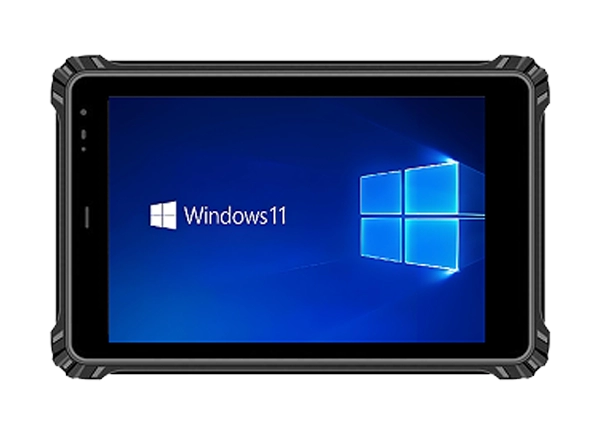
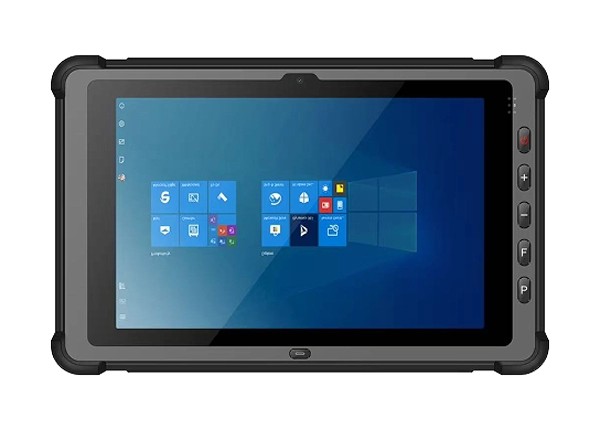
The RT-10C 10.1-inch Windows10/11 Rugged Tablet is designed for this type of field work. It combines a Windows 10/11 operating environment with an Intel Core 12th-generation processor, RS232, Gigabit Ethernet, USB 3.0, wireless connectivity, and a rugged IP67 enclosure. This combination allows technicians to carry diagnostic software and equipment communication interfaces in a single mobile device rather than relying on several separate tools.
RS232 is an older communication standard, but it remains common in industrial equipment. Many controllers, meters, PLC-related devices, testing instruments, CNC systems, and machine interfaces continue to use serial communication because the connection is simple, stable, and widely supported by existing equipment.
For a field technician, the main advantage is compatibility with equipment already installed at the worksite. Replacing an entire communication system simply because a modern computer lacks a serial interface is often impractical.
The RT-10C rugged tablet includes a DB9 interface with RS232 support. This gives technicians a direct physical interface for compatible serial equipment. When diagnostic software runs on Windows, the tablet can serve as the mobile computing platform for reading device parameters, checking communication status, changing settings, or performing service procedures.
This is particularly useful during maintenance visits. Instead of taking a laptop for software and a separate communication converter for the machine, technicians can configure the tablet around the equipment they actually need to service.
Not every diagnostic task involves a single device. Industrial systems increasingly use Ethernet-based communication to connect controllers, monitoring systems, sensors, drives, gateways, and other equipment.
This is where a reliable wired network interface becomes important. Wireless connections are convenient, but they are not always the preferred option when a technician needs a direct and predictable connection to industrial equipment.
The RT-10C provides a 1000 Mbps Ethernet port. For network-based diagnostics, this can be useful when connecting directly to equipment or an industrial network through a wired Ethernet connection. Technicians can use Windows-based diagnostic, configuration, monitoring, or engineering software while maintaining a physical network connection.
For example, during machine commissioning, an engineer may need to connect to a controller, access its configuration interface, monitor communication, and transfer diagnostic information. Having Ethernet integrated into the tablet reduces the need for additional adapters and makes the workflow easier to manage in the field.
RS232 and Ethernet are not competing technologies in many real-world maintenance environments. A single machine or production line may use both.
A technician could use RS232 to communicate with a local controller or instrument while using Ethernet to access a broader control network. Having both interfaces available on one rugged computer makes it easier to switch between these tasks without changing the primary device.
This is one of the practical strengths of the RT-10C 10.1-inch Windows rugged tablet. Its I/O configuration includes DB9 RS232, 1000 Mbps Ethernet, USB 3.0, USB Type-C, Micro HDMI, and a TF card slot supporting up to 1TB. The combination gives system integrators and maintenance teams more flexibility when connecting different types of equipment.
The tablet can also support optional 4G/5G communication, GPS or BeiDou positioning, NFC/RFID functions, fingerprint modules, and 1D/2D scanning modules. These options can be selected according to the actual requirements of a field deployment rather than forcing every project to use the same configuration.
Consider a technician responding to a machine fault on a production floor.
The first step may be to connect directly to the machine controller through RS232. The technician can open the required Windows diagnostic application, check communication parameters, review error codes, and verify whether the controller is responding correctly.
If the problem involves communication with another system, the technician can then connect through Ethernet and check the machine's network configuration. This may include verifying IP settings, accessing a web-based management interface, or checking whether the equipment is communicating with another controller or server.
If physical inspection is also required, the tablet's cameras can be used to record equipment conditions or capture labels and connection details. A front 5MP camera and rear 8MP camera are available on the RT-10C.
The result is a more continuous diagnostic process. Communication, software analysis, documentation, and field inspection can be handled from one device.
A diagnostic computer used in a workshop or production environment faces different conditions from an office laptop. It may be carried between machines, placed on workbenches, exposed to dust or moisture, or used in areas where accidental drops are possible.
The RT-10C has an IP67 protective rating and is designed to withstand a 1.2-meter drop onto a composite wooden floor according to its specified testing conditions. Its operating temperature range is -25°C to 60°C, while its storage temperature range is -30°C to 70°C.
These specifications are relevant when the tablet needs to move between indoor production areas and outdoor or semi-outdoor equipment locations. The 10.1-inch display also provides a practical balance between viewing diagnostic software and maintaining portability. Screen resolution can be configured at 800 × 1280, with 1200 × 1920 available as an option, while brightness options include 500, 800, and 1000 nits.
The 10-point touch panel has a 7H hardness rating. This is useful for technicians who need to operate software directly from the touchscreen instead of carrying a mouse and keyboard into every service location.
Diagnostics can take longer than expected, particularly when a technician needs to compare operating data, install software, test different components, or wait for equipment to reproduce an intermittent fault.
The tablet supports 16GB memory with storage configurations from 128GB to 2TB SSD. This provides room for Windows applications, diagnostic tools, equipment manuals, service records, and collected files.
The built-in polymer lithium-ion battery has a capacity of 7.6V/10000mAh. The specified battery life is up to 10 hours under the stated local 1080P video test condition. Actual operating time will vary depending on software load, wireless communication, screen brightness, and other usage conditions, but the capacity is suited to mobile service scenarios where frequent charging is inconvenient.
The same hardware configuration can support a range of industrial tasks. Field service engineers can use RS232 and Ethernet for equipment commissioning, configuration, troubleshooting, and preventive maintenance. System integrators can use the tablet when deploying control equipment or verifying communication between devices.
It can also be useful for transportation equipment, energy systems, factory automation, measurement equipment, and IoT-related installations where technicians need Windows-based software together with wired industrial interfaces.
For projects that require identification or data capture, optional NFC, RFID, fingerprint, and scanner modules can extend the tablet's functionality. Optional 4G/5G communication can also help when technicians need mobile connectivity away from a fixed network.
The right rugged tablet should be selected according to the interfaces and software required by the equipment, rather than simply focusing on screen size or processor specifications.
For serial-based systems, RS232 compatibility should be confirmed first. For network-connected equipment, the speed and physical type of Ethernet interface should be considered. If the project involves large diagnostic applications, engineering software, or local data storage, memory and SSD capacity also become important.
For mobile maintenance teams, protection level, operating temperature, battery capacity, display brightness, and optional communication modules can have an equally practical impact.
Fushizk Technology Co.,Ltd develops rugged computing tablets for industrial, outdoor inspection, automation, measurement, transportation, energy, and IoT applications. The company integrates R&D, manufacturing, and sales and reports more than 50 patent applications, with annual R&D investment exceeding 15%. Its product range covers Android and Windows rugged tablets as well as specialized rugged computing devices.
For equipment diagnostics, the value of a rugged tablet is ultimately determined by how well it fits the technician's actual workflow. With Windows 10/11 support, RS232, Gigabit Ethernet, multiple expansion interfaces, optional wireless communication, and IP67 protection, the RT-10C provides a practical platform for technicians who need to bring both computing power and equipment connectivity directly to the job site.