 EN
EN
 English
  简体中文
简体中文  Italian
  Spanish
  Turkish
  Japanese
  Portuguese
  Russian
  French
  German
  Polish
  Persian
  Arabic
 News
Latest news, updates & insights from Fushi.
Latest news, updates & insights from Fushi.
Sep 28, 2026Source:Intelligent Browse: 2
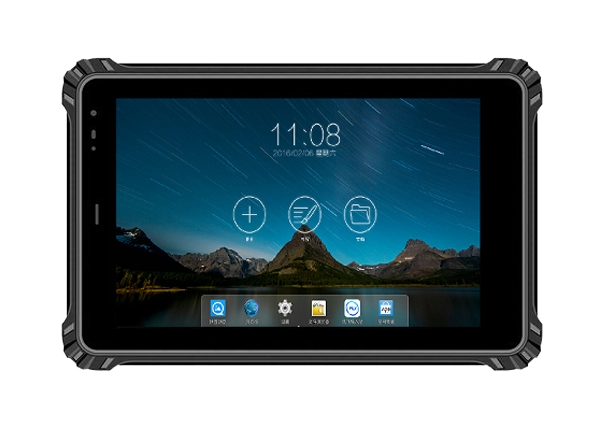
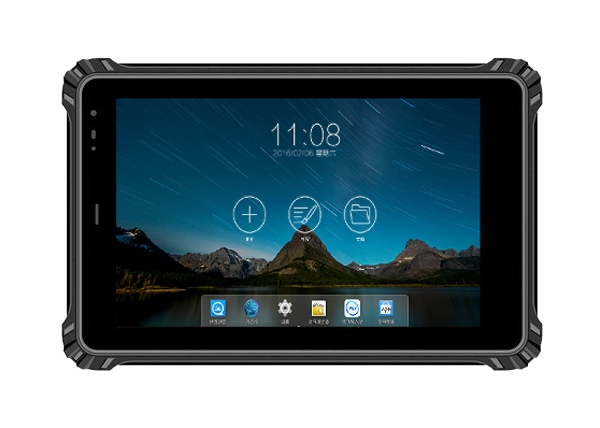
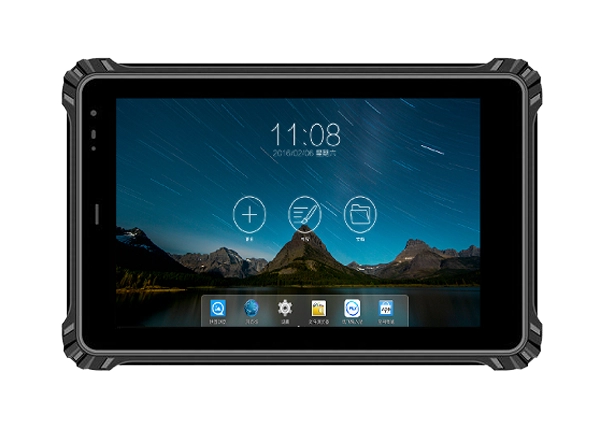
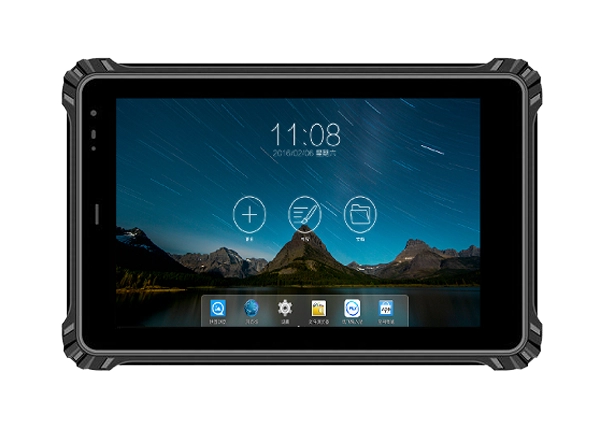
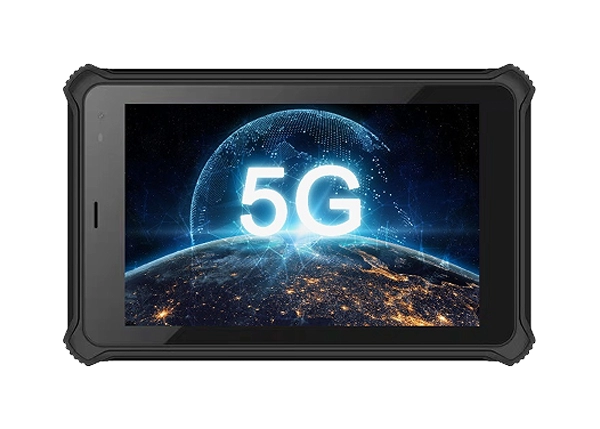
A rugged tablet used outside the office needs to handle two practical problems at the same time: staying powered during long tasks and maintaining reliable communication when work moves between locations. The combination of a detachable battery and 5G connectivity gives the RT-10D9 a practical foundation for field work, where charging opportunities may be limited and data often needs to move quickly between workers, vehicles, equipment, and remote systems.
Battery capacity is only one part of mobile device endurance. In many field environments, the bigger issue is what happens when the battery eventually runs low.
A tablet used for inspection, equipment maintenance, vehicle operations, or outdoor data collection may be needed throughout a working shift. Stopping the task to connect a charger is not always convenient, particularly when the operator is moving between work areas or working inside a vehicle.
The RT-10D9 uses a detachable polymer lithium-ion battery with a rated capacity of 3.8V 8500mAh. This design separates the battery from the fixed structure of the tablet, creating a more practical approach to battery management than relying entirely on an integrated battery.
The specified battery endurance is approximately eight hours under a defined test condition: 50% volume while playing 1080P local high-definition video. Actual working time will vary depending on screen brightness, network activity, applications, GPS usage, camera operation, and other workload factors. For field teams, this distinction is important because video playback is different from continuous 5G communication, location tracking, or intensive data collection.
The key benefit of a detachable design is therefore not simply a claimed operating time. It is the ability to manage the power source as part of the overall workflow.
A rugged tablet becomes considerably more useful when it can communicate with cloud platforms, remote systems, and other connected devices without depending on a local Wi-Fi network.
The RT-10D9 supports 2G, 3G, 4G, and 5G communication, giving it a wider range of cellular connectivity options for different deployment environments. Its supported 5G bands include multiple NR bands, while LTE support covers a broad range of commonly used bands.
For field workers, 5G can be useful when the task involves moving larger amounts of data rather than simply sending basic text information. Inspection photographs, equipment records, video files, maps, digital forms, and other operational data can require more network capacity than simple messaging or status updates.
A worker inspecting equipment, for example, can capture an image with the rear 13MP autofocus camera, enter inspection information on the tablet, and transmit the collected data through a cellular connection. The tablet therefore becomes part of the information workflow instead of functioning only as a local data terminal.
These two features become more meaningful when considered together.
Continuous cellular communication can consume more power than basic offline use. A device operating with 5G, GPS, a bright display, camera functions, and business applications may have a very different power profile from a tablet being used primarily for document viewing.
This is why field deployment needs to consider both connectivity and power management. A high-capacity detachable battery provides a way to address the power side, while 5G provides a communication option when workers are away from fixed networks.
For teams managing multiple devices, this can also change maintenance procedures. Battery management can become a planned operational task rather than an emergency response when a built-in battery reaches a low charge.
The combination is particularly relevant to mobile inspection, transportation, energy, automation, and other workflows where the tablet moves with the operator instead of remaining at a desk.
5G is only one part of the connectivity system. The RT-10D9 also supports Wi-Fi 6-compatible wireless networking through 802.11a/b/g/n/ac/ax and supports 2.4GHz, 5.8GHz, and 6GHz frequencies. Bluetooth 5.3 provides another short-range communication option.
Location functions are also built into the platform. Depending on the selected configuration, positioning can use GPS, BeiDou, Galileo, or GLONASS. Optional GNSS and RTK configurations are available for applications requiring higher-precision positioning.
This combination gives field teams several communication methods instead of forcing every task through one network type.
For example, a worker may use Wi-Fi inside a facility, 5G while traveling between sites, Bluetooth to communicate with nearby equipment, and GNSS for location-related applications. The most appropriate connection can therefore depend on where the tablet is being used and what the application requires.
Connectivity has limited value if the device cannot tolerate the environment in which it is being used.
The RT-10D9 has an IP67 protection rating and is specified for operation from -20°C to 60°C. Its storage temperature range extends from -30°C to 70°C, with humidity tolerance listed at up to 95% non-condensing.
The tablet is also specified for a 1.2-meter drop onto a composite wood floor and includes MIL-STD-810H among its listed certifications and qualifications.
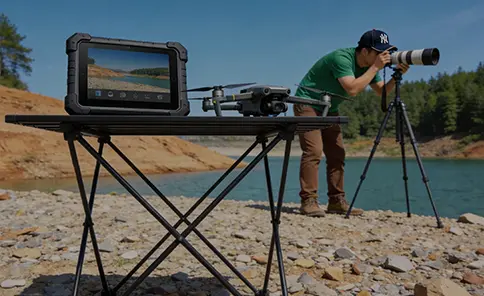
These specifications are relevant to the type of work where mobile connectivity is most useful. A tablet carried between vehicles, workshops, outdoor inspection points, and industrial areas may encounter dust, water exposure, temperature changes, and accidental drops.
The goal of rugged construction is not to make the tablet indestructible. Instead, the protection features are intended to reduce the risks associated with normal field handling and environmental exposure.
The tablet uses a 10.1-inch LCD with a choice of 800 × 1280 or 1200 × 1920 resolution. Brightness options include 500, 800, and 1000 nits.
The higher-brightness configurations can be useful when the tablet needs to be viewed in brighter outdoor environments. The touch panel supports 10-point touch and 7H hardness, with customized options including anti-glare, glove touch, and wet-hand touch.
These options matter because the way a tablet is operated changes according to the work environment. A technician wearing gloves may have different requirements from an office user, while outdoor inspection can create different visibility and touch conditions from indoor equipment monitoring.
Instead of treating the screen as a fixed specification, deployment teams can select a configuration according to the working environment and interaction method.
Another consideration for field deployment is what happens when the tablet needs to connect to equipment rather than simply access the internet.
The RT-10D9 includes USB-A, USB-C, Mini HDMI, a 100Mbps network port, a 3.5mm audio jack, SIM and TF card slots, and a 12-pin Pogo Pin. It also provides two aviation plugs that can be modified for functions such as vehicle power supply, network connections, and serial communication.
This is particularly useful for customized vehicle or equipment applications. A tablet mounted in a vehicle, for example, may need more than wireless connectivity. It may need a power connection, communication interface, or integration with existing equipment.
The TF card slot supports storage expansion up to 1TB, while the standard memory configurations include 8GB RAM with either 128GB or 256GB storage. This provides additional flexibility when applications need to store images, records, maps, documents, or other local data.
The combination of power management, cellular connectivity, interfaces, and environmental protection gives the tablet a range of potential field applications.
In oil and gas operations, workers can use connected tablets for inspection records, equipment documentation, location-based tasks, and communication with remote systems.
In intelligent manufacturing and automation, the tablet can act as a mobile interface for data collection, equipment checks, production information, and connected workflows.
For vehicle applications, the aviation plug options can support customized power, network, or serial functions, while 5G and GNSS provide wireless communication and positioning capabilities.
Law enforcement and outdoor patrol teams can also benefit from a large 10.1-inch display, cellular communication, cameras, location services, and rugged construction when the device is configured for their operational requirements.
Medical applications represent another possible use case, particularly where a larger mobile display, wireless communication, and device durability are required.
The important point is that the same hardware does not need to perform exactly the same role in every industry. Its combination of interfaces, communications, battery design, and optional modules allows the configuration to be adapted to different workflows.
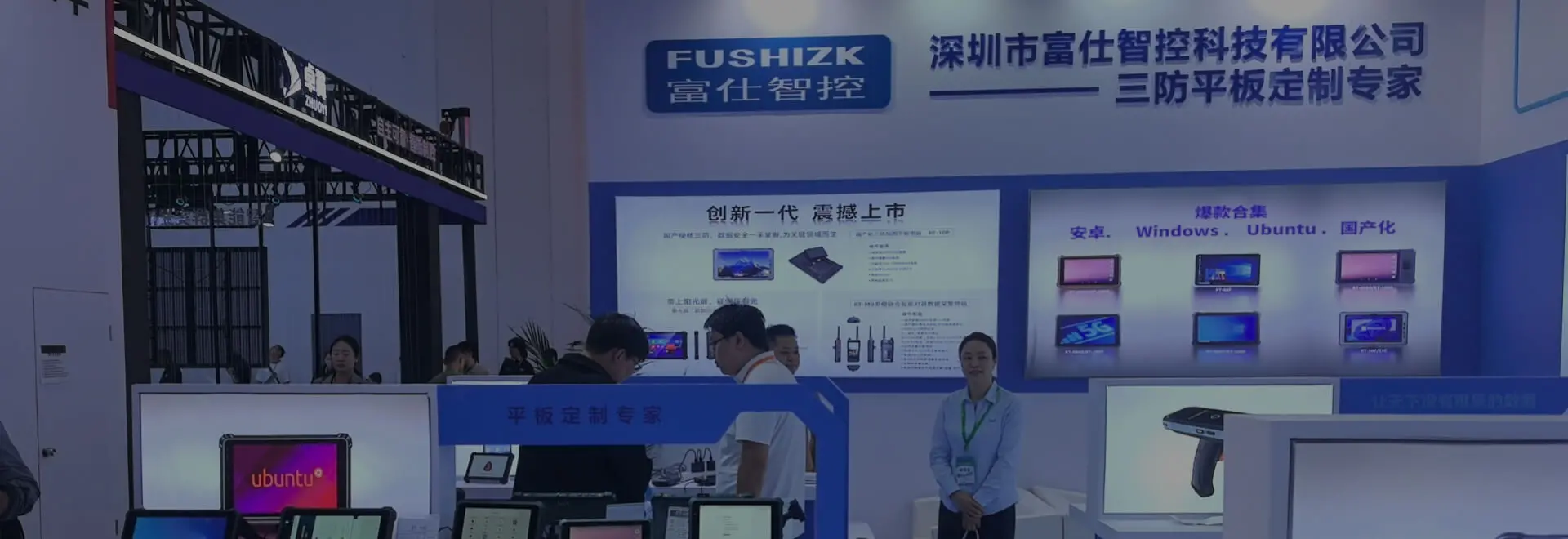
The development of this type of device requires more than assembling a rugged enclosure around standard tablet hardware. Fushizk Technology Co., Ltd. focuses on rugged computing tablets and integrates R&D, production, and sales.
Established in 2021 in Shenzhen, the company develops 8-inch and 10-inch Android rugged tablets, Windows rugged tablets, explosion-proof models, vehicle-mounted rugged tablets, medical rugged tablets, and other reinforced computing devices.
Its technical capabilities include embedded system development, AI algorithm optimization, and wireless communication technology. The company states that it has applied for more than 50 patents and invests more than 15% annually in R&D.
This focus is relevant to customized rugged computing because field deployments often require more than a standard consumer tablet. Interfaces, wireless communication, positioning, mounting, battery configuration, and optional modules may all need to match the equipment and workflow already used by a customer.
A rugged tablet is most useful when its hardware matches the way people actually work.
The RT-10D9 combines an 8500mAh detachable battery with 5G, Wi-Fi 6-compatible wireless networking, Bluetooth 5.3, GNSS options, IP67 protection, a 10.1-inch display, and multiple physical interfaces. These features give system integrators and field teams several ways to configure the device for connected mobile work.
The detachable battery addresses a practical power-management requirement, while 5G provides a mobile communication path when fixed networks are unavailable. Add the optional positioning, scanning, NFC, fingerprint, and other modules, and the tablet can be adapted to workflows that require more than basic mobile computing.
For applications where workers need to stay connected while moving between equipment, vehicles, facilities, and outdoor locations, the RT-10D9 provides a hardware platform designed around that combination of mobility, connectivity, and field durability.