 EN
EN
 English
  简体中文
简体中文  Italian
  Spanish
  Turkish
  Japanese
  Portuguese
  Russian
  French
  German
  Polish
  Persian
  Arabic
 News
Latest news, updates & insights from Fushi.
Latest news, updates & insights from Fushi.
Aug 24, 2026Source:Intelligent Browse: 57
Industrial maintenance is rarely limited to a clean workshop and a desk. Technicians may move between production lines, warehouses, utility areas, outdoor equipment, and inspection points throughout the same workday. They need to view equipment information, record maintenance results, take photos, communicate with colleagues, and sometimes access cloud-based or mobile service systems without carrying a conventional laptop.
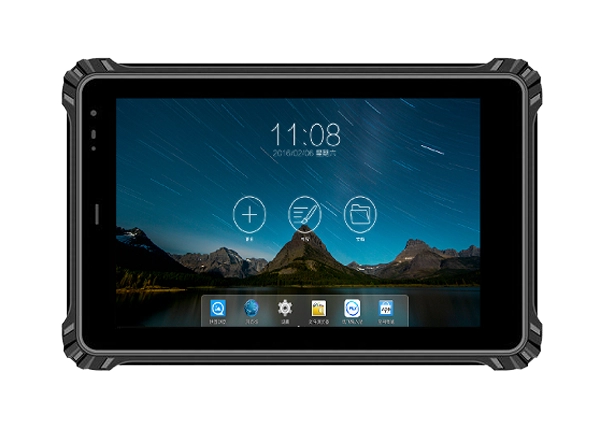
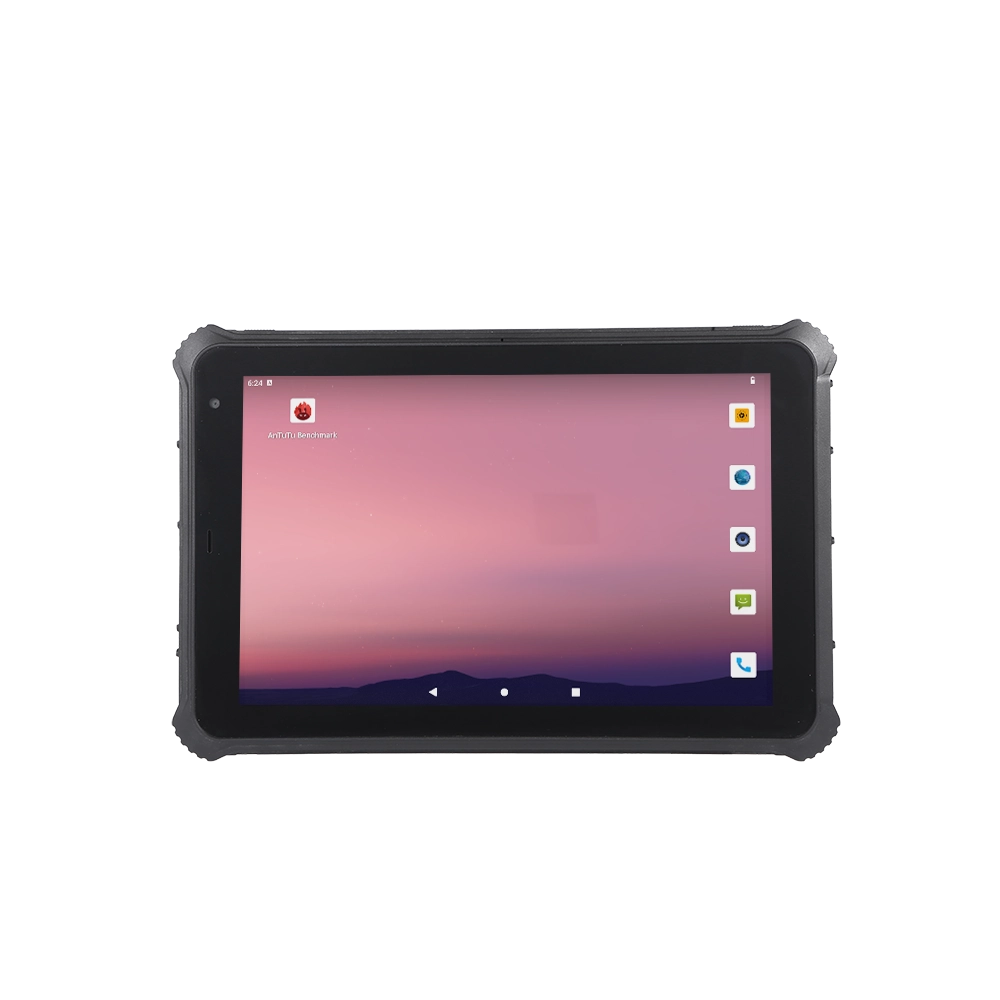
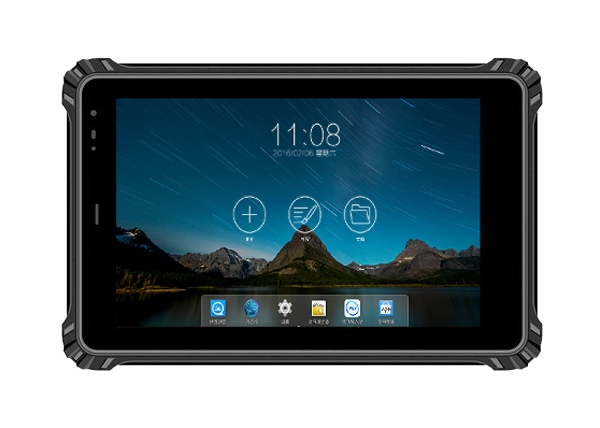
This is where the RT-10MF 10-inch Android13 Rugged Tablet can fit into a maintenance workflow. With Android 10/13 support, multiple wireless communication options, GPS and satellite positioning, an IP67 enclosure, a large 10-inch touchscreen, and optional scanning and RFID functions, it is designed around the practical requirements of mobile industrial work.
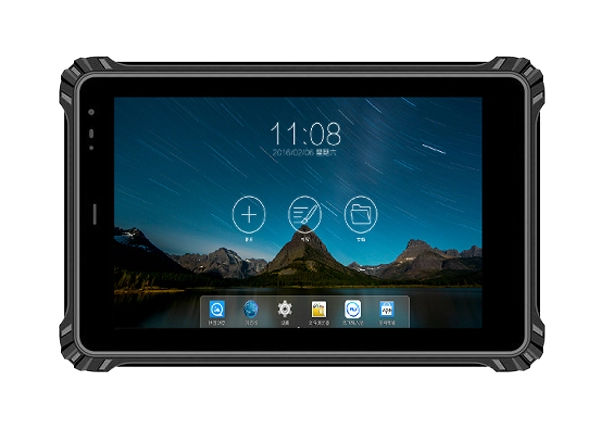
A maintenance tablet has a different job from an ordinary consumer tablet. It may be used to check equipment IDs, open digital maintenance forms, review service instructions, capture photos of faults, record readings, or communicate with a remote team.
The physical environment also matters. A device used around machinery can be exposed to dust, moisture, temperature changes, and accidental drops. A maintenance team therefore needs a combination of computing functions and physical protection rather than relying on a standard tablet with a protective case.
The RT-10MF rugged tablet has an IP67 protective rating and is specified for operation from -20°C to 60°C. It also has a 1.2-meter drop-resistant design under the stated composite wood floor test condition. These specifications make it better suited to demanding work areas than a typical office-oriented tablet.
Screen size directly affects how technicians interact with maintenance software.
An 8-inch device is easy to carry, but technicians may need to scroll frequently when viewing equipment records, diagrams, checklists, or service instructions. A 10-inch display provides more working space while remaining considerably more portable than a full-size laptop.
The RT-10MF uses a 10-inch LCD screen with an 800 × 1280 resolution, with a 1200 × 1920 option. Brightness can be configured at 500, 800, or 1000 nits. For maintenance teams that move between indoor facilities and brighter working areas, the higher-brightness options can make screen information easier to see.
The 10-point capacitive touchscreen has a 7H hardness rating. Optional anti-glare, glove-touch, and wet-hand touch configurations can also be considered when the tablet will be used under specific operating conditions.
This is particularly practical when a technician needs to operate a digital checklist while standing beside a machine rather than returning to a workstation after every inspection step.
Maintenance work often depends on connectivity. Technicians may need to synchronize work orders, upload inspection results, communicate with a central system, or access online equipment information.
The RT-10MF 10-inch rugged tablet supports Wi-Fi and Bluetooth 5.3, while cellular communication can support 2G/3G/4G and optional 4G/5G configurations. This provides different connectivity options depending on the deployment environment.
For example, Wi-Fi may be suitable inside a factory with established wireless coverage. A technician working across a larger site may use cellular connectivity where Wi-Fi coverage is unavailable. Bluetooth can also be useful when communicating with compatible peripherals or nearby devices.
The practical benefit is not simply having more wireless standards. It is the ability to select the appropriate connection for different maintenance locations without redesigning the entire workflow around one network type.
Location becomes more important when maintenance teams are responsible for equipment spread across a large site or multiple locations.
The RT-10MF supports GPS, BeiDou, Galileo, and GLONASS, with three of the four positioning systems available according to the product configuration. Optional GNSS and RTK high-precision positioning modules can also be considered for projects requiring more precise location information.
This can help link inspection records with physical equipment locations. For example, a technician visiting several outdoor units can record where a maintenance task was performed rather than relying entirely on manual location descriptions.
For infrastructure, energy, transportation, environmental monitoring, and outdoor inspection work, this type of positioning capability can be especially useful because the technician is not always working beside a fixed workstation or network terminal.
Maintenance records often need more than a written note.
A technician may need to document a damaged component, wiring condition, meter reading, equipment label, or completed repair. The RT-10MF has a 5MP front camera and a 13MP rear camera with autofocus and LED light.
The rear camera can be used for clearer field documentation, while the LED light can assist when photographing equipment in less favorable lighting conditions.
This creates a straightforward workflow: inspect the equipment, capture the relevant condition, enter the maintenance result, and upload the information through the available network connection.
For companies managing preventive maintenance programs, consistent photo records can also make it easier for supervisors to review work completed by technicians at different locations.
Identifying the correct asset is one of the first steps in many maintenance jobs.
If a facility contains hundreds or thousands of machines, pumps, electrical cabinets, instruments, or other assets, manually entering equipment numbers creates unnecessary work and increases the chance of selecting the wrong record.
The RT-10MF supports optional 1D/2D scanning modules as well as NFC, HF/LF, UHF, and RFID-related configurations. The available UHF options include PR9200 with a stated 3–5 meter reading distance and R2000 with a stated 10–15 meter reading distance, depending on the selected configuration and operating conditions.
This allows the tablet to be configured around the identification method already used by a maintenance operation. A technician can scan an equipment code, open its corresponding digital record, perform the inspection, and submit the result without manually typing a long asset number.
A rugged tablet can have strong specifications on paper but still be inconvenient if technicians constantly need to recharge it.
The RT-10MF uses a built-in 3.8V 10000mAh polymer lithium-ion battery. The specified battery life is 10 hours under the manufacturer's stated 1080P local high-definition video test condition. Actual battery life will vary depending on screen brightness, wireless communication, applications, and workload.
For maintenance teams, the larger battery capacity is useful because field work does not always follow a fixed schedule. A technician may start with scheduled inspections and then spend additional time troubleshooting an unexpected equipment problem.
Android can be practical for organizations that already use mobile maintenance applications, digital forms, barcode systems, or customized field-service software.
The RT-10MF supports Android 10/13, with Android 13 available for deployments requiring the newer operating environment. The MTK8788 processor uses eight cores with a main frequency of 2.2GHz, while memory configurations include 4GB+64GB and 8GB+128GB.
For maintenance teams, the important point is application compatibility with the company's existing software environment. The tablet can be deployed for inspection forms, asset management applications, inventory tools, communication software, remote service platforms, and other Android-based workflows.
Optional modules also allow organizations to configure the hardware around a specific project instead of equipping every tablet with functions that may not be required.
Maintenance teams may work around machinery, production equipment, utility systems, transportation infrastructure, and outdoor installations. The tablet therefore needs to handle more than application processing.
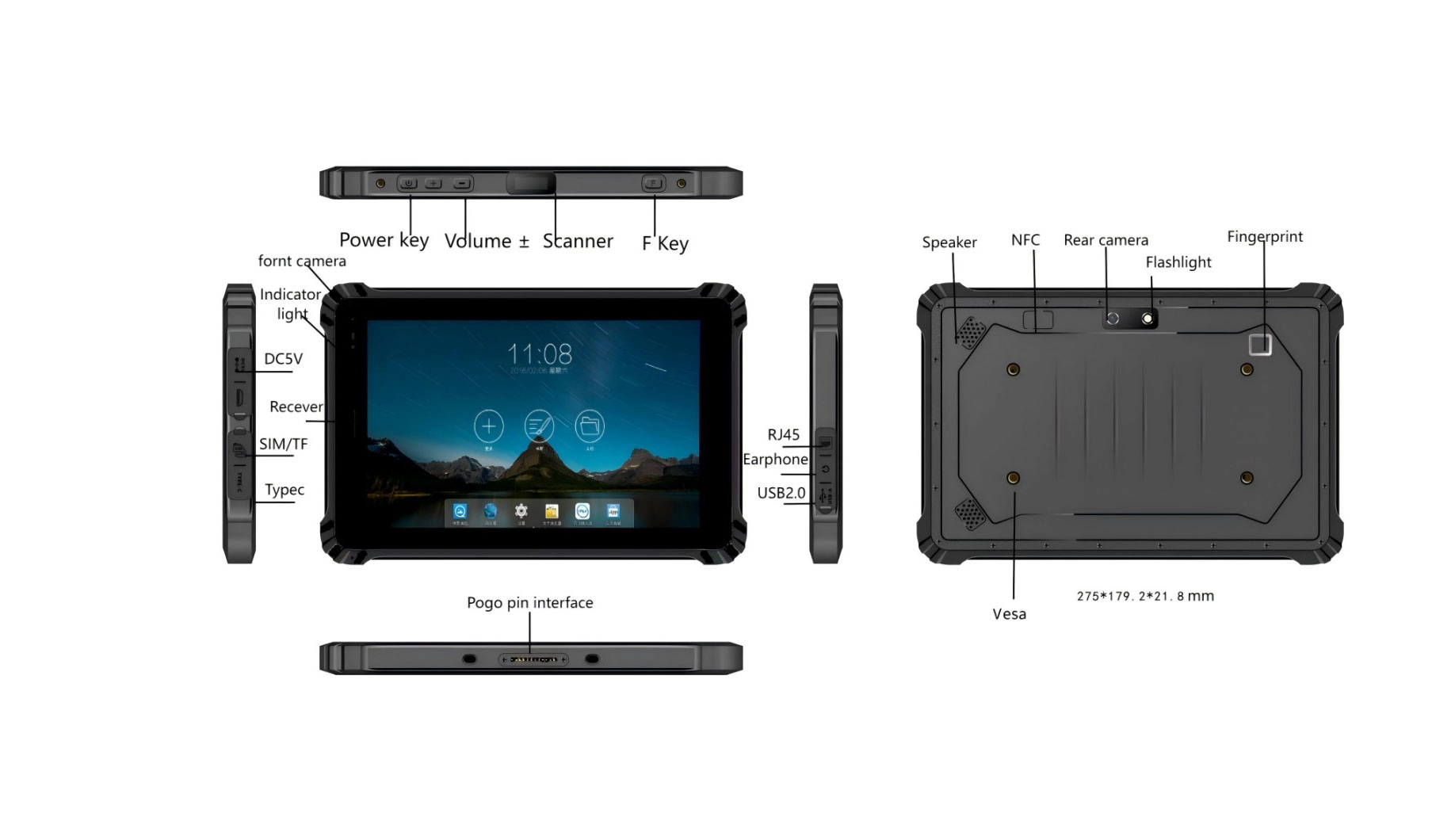
The RT-10MF measures 275 × 179 × 21.8 mm and weighs approximately 1150g. It provides USB Type-A, USB Type-C, Micro HDMI, a 100Mbps network port, a 12-pin Pogo Pin, SIM card slot, and TF card support up to 1TB.
These interfaces give system integrators additional options for connecting accessories and configuring the tablet for specific maintenance applications.
Fushizk Technology Co.,Ltd develops rugged computing products for industrial automation, measurement equipment, environmental monitoring, power systems, transportation, outdoor inspection, and IoT applications. The company integrates R&D, production, and sales and has developed its technical capabilities around embedded system development, AI algorithm optimization, and wireless communication technology.
A rugged tablet should not be selected simply because it has a high specification sheet. Maintenance teams should start with their actual workflow: how equipment is identified, where technicians work, which applications they use, how data is transmitted, and what environmental conditions the device will face.
The RT-10MF brings these requirements together in one 10-inch Android platform. Its IP67 protection, 10000mAh battery, multi-system positioning, wireless connectivity, high-brightness display options, camera system, and optional RFID and scanning functions give maintenance teams a practical foundation for mobile equipment inspection and service tasks.
For organizations looking to move maintenance records away from paper forms and fixed workstations, this type of rugged tablet can provide a more direct connection between technicians, equipment, and the digital maintenance system.