 EN
 English
 简体中文
 Italian
 Spanish
 Turkish
 Japanese
 Portuguese
 Russian
 French
 German
 Polish
 Persian
 Arabic
News
Latest news, updates & insights from Fushi.
Latest news, updates & insights from Fushi.
Nov 10, 2026Source:Intelligent Browse: 1
Multi-protocol identification is changing how industrial teams collect information, verify identities, and manage equipment in the field. By combining RFID, NFC, and other communication technologies in one mobile terminal, businesses can simplify identification workflows and reduce dependence on separate scanning devices.
In industrial environments, identifying an object is often only the first step in a larger workflow. Employees may need to verify equipment ownership, retrieve maintenance records, check inventory movements, or confirm personnel access before completing a task. Using separate devices for different identification standards can make these processes less efficient, particularly when workers move between production areas, warehouses, vehicles, and outdoor locations.
RFID and NFC provide different approaches to short-range identification and data exchange. Their suitability depends on the tag type, operating frequency, communication protocol, reading distance, and application requirements.
For example, NFC is commonly used for contactless identification, access verification, and information exchange. HF RFID can support applications such as asset identification and inventory management, while LF RFID remains relevant in certain legacy identification systems and specialized environments.
A mobile data terminal that supports multiple protocols allows businesses to consolidate several identification functions into one device. This can reduce the number of separate handheld readers that employees need to carry and make it easier to connect identification activities with business software.
For companies evaluating equipment from a rugged tablet factory, protocol compatibility should be considered alongside screen size, operating system, communication interfaces, and environmental protection. A device may support RFID in general, but the actual supported frequencies and standards determine whether it can work with an existing identification infrastructure.
RFID is a broad identification technology covering different frequency bands and communication standards. Choosing the correct configuration requires understanding the existing tags and readers used within a project.
HF RFID commonly operates at 13.56 MHz. Standards such as ISO/IEC 14443A, ISO/IEC 14443B, and ISO/IEC 15693 are relevant to different contactless card and tag applications. Depending on the reader module and tag compatibility, these technologies can be used for personnel identification, equipment tracking, document management, and industrial asset registration.
NFC is closely related to 13.56 MHz contactless communication and is widely used in short-range interactions. In a mobile terminal, NFC can provide a convenient way to read compatible cards or tags and exchange identification information with supported devices.
LF RFID, including 125 kHz systems, is often found in established access control and identification installations. Many industrial and facility management projects continue to use these systems, so supporting low-frequency identification can be useful when businesses need to maintain compatibility with existing infrastructure.
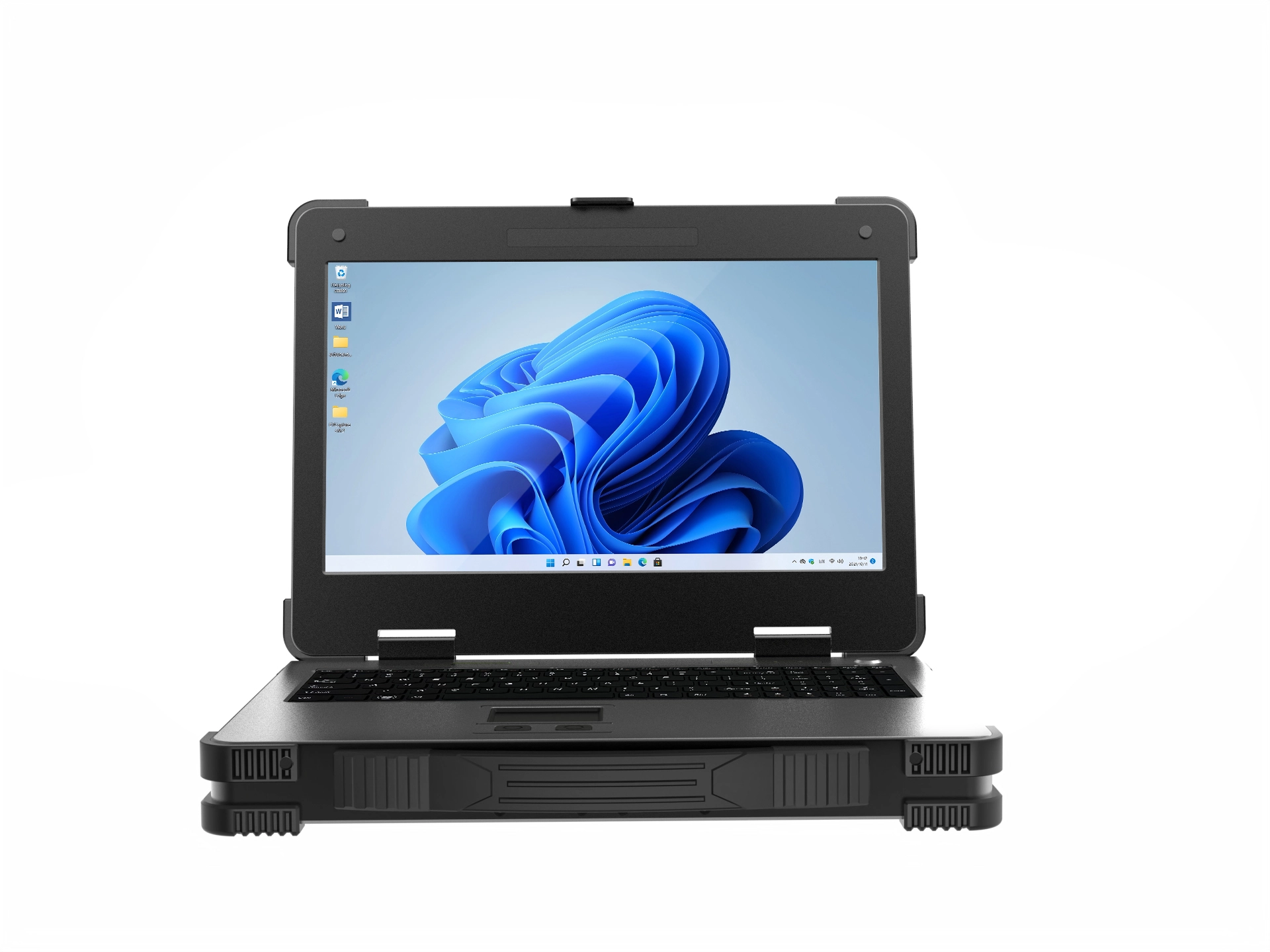
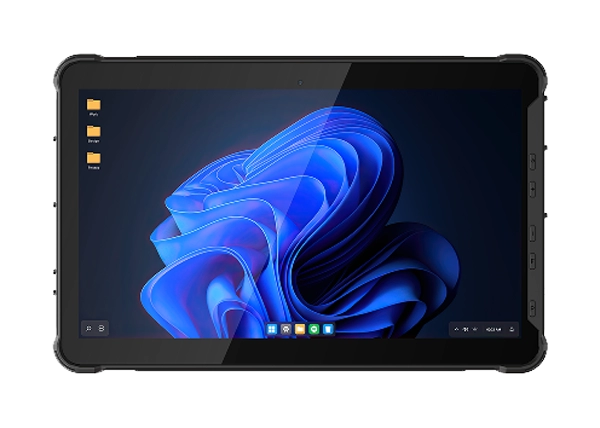
The RT-12C 12-inch Windows 10/11 Rugged Tablet supports NFC, HF, and LF-related module configurations. Its listed protocol support includes 14443A, 14443B, 15693, and 125K, with RFID support covering 14443A, 14443B, 15693, and low-frequency 125K applications.
This combination provides a broader hardware foundation for projects involving different card and tag technologies. However, the actual reading capability depends on the installed module, antenna design, tag type, software integration, and configuration selected for the project. Buyers should confirm these details before deployment.
Equipment identification is a routine requirement in factories, warehouses, power facilities, and maintenance departments. Without a consistent identification process, workers may need to search through spreadsheets, printed labels, or separate inventory systems to find the correct equipment information.
An RFID-enabled rugged tablet can connect physical identification with digital records.
For example, maintenance personnel can approach a tagged machine, scan its RFID tag, and retrieve the corresponding equipment record through an application running on the tablet. The record may contain an asset number, maintenance history, inspection schedule, or relevant technical documents.
During warehouse operations, compatible tags can help staff verify inventory items and associate identification results with stock management software. In production environments, RFID identification can also support work-in-progress tracking and equipment registration.
The benefit comes from connecting identification with the next operational step. Instead of simply reading a tag, the employee can use the same terminal to review information, enter inspection results, capture photographs, and transmit updates through the available network connection.
For this type of workflow, the RT-12C Rugged Tablet combines RFID-related module options with a 12-inch display and Windows operating system support. The larger screen provides more working space for viewing asset records, checking tables, and interacting with industrial management software.
Its front 5MP and rear 8MP cameras can also support visual documentation when the application requires photographs of equipment conditions or identification labels.
Personnel identification is another important application for RFID and NFC-enabled mobile terminals.
In industrial facilities, power stations, construction sites, and restricted operational areas, employees may need to verify their identities before accessing certain equipment or completing specific procedures.
Compatible identification cards can be read through supported NFC or RFID modules. The terminal can then pass the identification result to an authorized management application for verification.
For example, a field supervisor may use a mobile terminal to check personnel information during an inspection. A maintenance team may also associate employee identification with a completed work order, helping establish who performed a particular task and when it was recorded.
The RT-12C also offers optional fingerprint modules, including standard, customized public security, and FBI fingerprint configurations. These options may be relevant to projects requiring additional biometric identification capabilities.
RFID card reading and fingerprint verification serve different purposes and should not automatically be treated as interchangeable security measures. When both are required, the software system needs to define how the identification methods work together, how credentials are managed, and what access permissions apply.
This is particularly important for law enforcement, public safety, and other applications involving sensitive identity information.
Hardware identification is useful only when the collected information can be processed by the software system used by the organization.
Windows-based mobile terminals are often selected for projects that depend on existing desktop applications, industrial management software, database systems, or specialized business programs. Using a Windows rugged tablet can make it easier for IT teams to maintain a familiar software environment, subject to application and driver compatibility.
The RT-12C 12-inch Windows 10/11 Rugged Tablet is equipped with Intel Core 12th Generation i5-1235U or i7-1255U processor options, 16GB memory, and SSD storage configurations ranging from 128GB to 2TB.
These hardware configurations provide a platform for running compatible Windows applications, managing identification records, and handling multiple operational tasks. The actual performance will depend on the software workload and selected configuration.
For system integration, the tablet also provides USB 3.0 Type-A and Type-C ports, a Gigabit Ethernet interface, a DB9 RS232 port, and a 12-pin Pogo Pin connector. These interfaces can support connections with compatible peripherals, industrial equipment, docking accessories, and external communication systems.
When planning an RFID deployment, buyers should confirm whether the selected module communicates through an internal interface or an external connection, and whether the required drivers, SDKs, and application interfaces are available.
This is an important discussion to have with a rugged tablet factory before finalizing a customized hardware configuration. It helps avoid situations where the physical identification module is compatible with the tag but cannot communicate correctly with the customer's software.
Mobile identification systems are not always used in locations with stable wired network access. Warehouse staff, outdoor inspection teams, and vehicle operators may need to collect information first and synchronize it with a central platform later.
The RT-12C supports WiFi 6-compatible connectivity through IEEE 802.11ax, Bluetooth 5.3, and optional 4G or 5G communication modules. GPS positioning and domestic BeiDou positioning are also available according to the selected configuration.
These communication options can support different deployment requirements. WiFi is suitable for connected factory and warehouse environments, while cellular connectivity can help field teams access remote business systems where mobile network coverage is available. Bluetooth can connect compatible wireless peripherals.
The device features a 12-inch LCD display with a resolution of 1200 × 2000 and a standard brightness of 500 nits. Its 10-point touchscreen supports interactive operation, while the 7H screen hardness specification provides information about the panel's surface hardness.
For mobile workers, screen size and interface usability matter because identification is often followed by reviewing records, entering data, or checking instructions. A larger display can make these tasks more convenient than relying on a small handheld reader.
Selecting a suitable mobile identification terminal requires more than checking whether RFID or NFC appears on the product specification sheet.
Before placing an order, project buyers should clarify several technical points:
1. Supported protocols and frequencies: Confirm whether the module supports the required 14443A, 14443B, 15693, or 125K standards and whether it is compatible with the tags already in use.
2. Reading performance: Check the actual reading distance, antenna arrangement, tag orientation requirements, and performance under the intended operating conditions.
3. Software compatibility: Confirm driver availability, SDK support, communication methods, and compatibility with the customer's Windows applications.
4. Module configuration: Determine whether NFC, HF, LF, RFID, fingerprint, or barcode scanning modules are installed as standard or supplied as optional configurations.
5. Environmental requirements: Evaluate protection ratings, operating temperature, battery endurance, and drop resistance according to the actual deployment environment.
6. System interfaces: Check whether the device needs USB, RS232, Ethernet, Pogo Pin, or other connections to communicate with existing equipment.
These details are particularly important when sourcing from a rugged tablet factory that offers customization. Confirming the hardware and software requirements before production can reduce integration problems during installation and testing.
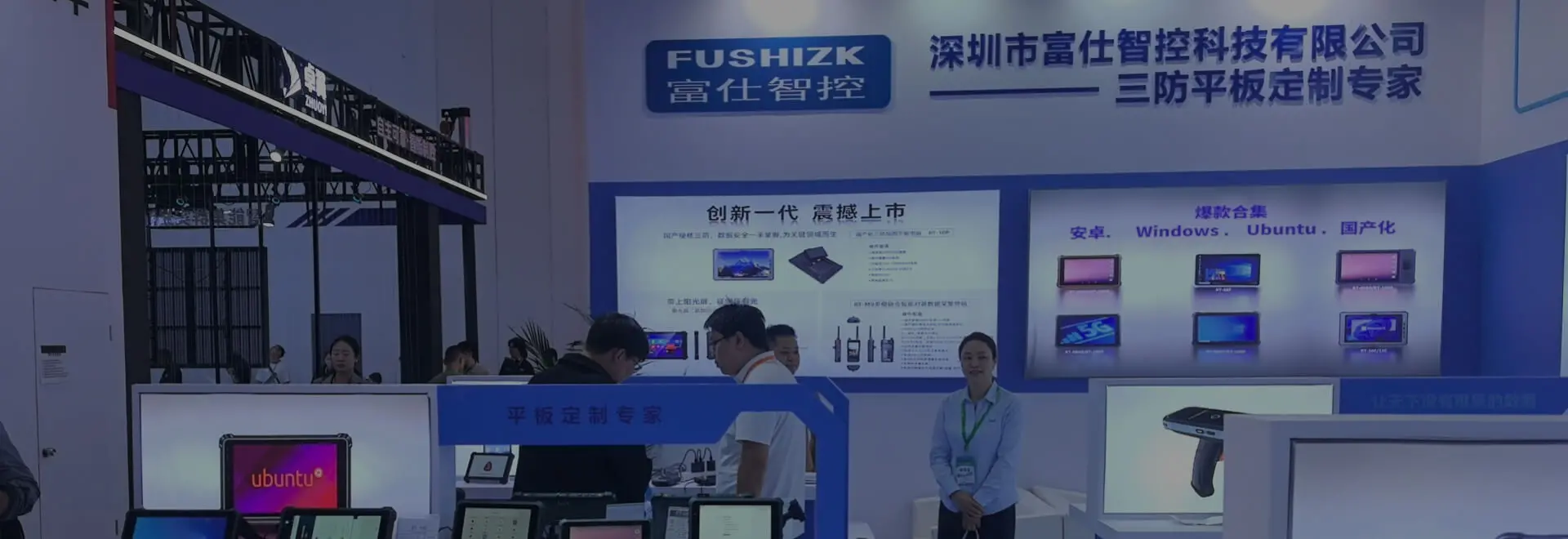
Established in 2021 in Shenzhen, China, Fushizk Technology Co.,Ltd integrates research and development, production, and sales, focusing on rugged computing tablets and customized hardware solutions.
The company's product portfolio includes Android and Windows rugged tablets, explosion-proof tablets, vehicle-mounted rugged tablets, medical rugged tablets, and reinforced tablets for specialized applications. These products serve industries such as factory automation, mechanical automation, environmental monitoring, medical equipment, transportation, power systems, outdoor inspection, and IoT applications.
Fushizk identifies embedded system development, AI algorithm optimization, and wireless communication technology as three of its core technical areas. The company has applied for more than 50 patents, with annual R&D investment exceeding 15% according to its company information. Its R&D personnel account for approximately 30% of the workforce.
For customers seeking an RFID-enabled mobile terminal, these capabilities are relevant to discussions about hardware configuration, module integration, communication compatibility, and customized application requirements.
The RT-12C 12-inch Windows 10/11 Rugged Tablet is one option for projects that require a larger Windows-based terminal with multiple identification and communication capabilities. Its RFID, NFC, HF, and LF module options can be considered alongside optional fingerprint and barcode scanning configurations.
For businesses evaluating equipment from a rugged tablet factory, the key is to match the device configuration with the actual identification workflow rather than selecting modules based only on their availability.
Fushizk Technology Co.,Ltd works with customers to discuss application requirements and suitable rugged computing configurations. Businesses interested in the RT-12C can provide details about their RFID standards, tag types, software environment, and deployment conditions to help determine an appropriate configuration before procurement.