 EN
 English
 简体中文
 Italian
 Spanish
 Turkish
 Japanese
 Portuguese
 Russian
 French
 German
 Polish
 Persian
 Arabic
News
Latest news, updates & insights from Fushi.
Latest news, updates & insights from Fushi.
Oct 30, 2026Source:Intelligent Browse: 4
A vehicle-mounted rugged tablet brings GPS positioning, mobile data access, and field-work applications together in one device. For fleet operators, maintenance teams, and transport service providers, a vehicle terminal can help connect location information with work orders, inspection records, and operational events.
A vehicle workflow often involves more than displaying a vehicle's current position. Drivers and field personnel may need to receive task information, record service progress, capture photographs, communicate with a dispatch platform, and synchronize data after completing a job.
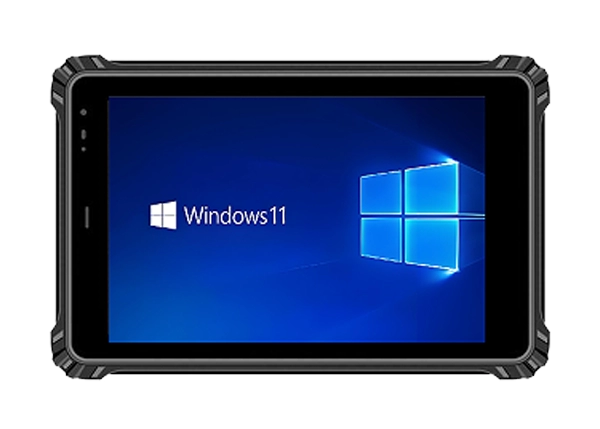
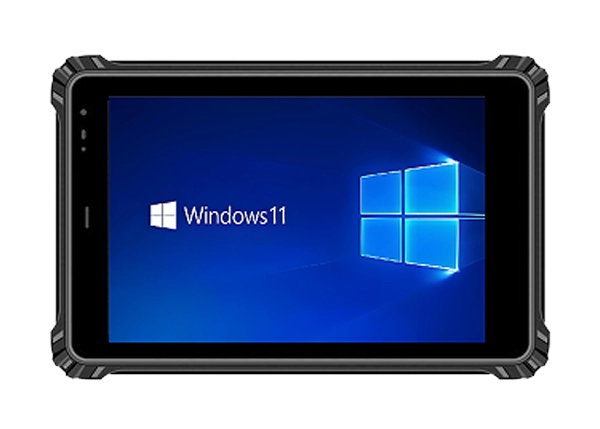
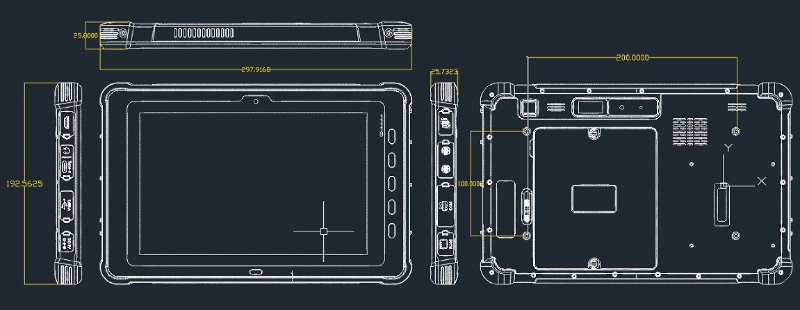
The RT-10C 10.1-inch Windows 10/11 rugged tablet provides GPS based on the U-Blox M7N module, 4G LTE connectivity, dual-band Wi-Fi, Bluetooth 5.2, and multiple industrial interfaces. Its 12-pin Pogo Pin interface and optional CAN Bus configuration also provide integration possibilities for vehicle-related applications.
Vehicle operations generate different types of information. GPS coordinates describe location, work orders define assigned tasks, and inspection records document what happened during a job.
When these functions are managed through separate devices or disconnected systems, fleet personnel may need to switch between applications or transfer information manually.
A vehicle-mounted rugged tablet can provide a common interface for these activities. Depending on the software platform, it can support workflows such as:
l Reviewing assigned vehicle routes and work orders.
l Checking location information during field operations.
l Recording inspection results and maintenance events.
l Capturing photographs and other supporting evidence.
l Accessing dispatch or fleet-management applications.
l Synchronizing records with a central platform.
The RT-10C runs Windows 10 or Windows 11 and uses Intel Core i5-1235U or i7-1255U processor options. This allows businesses to evaluate the device with Windows-based fleet, maintenance, and enterprise applications.
The final workflow depends on application compatibility, network coverage, vehicle installation, and the selected hardware configuration.
GPS information becomes more useful when it is connected to operational tasks. A structured workflow helps teams turn positioning data into records that can be reviewed and managed.
The RT-10C uses the U-Blox M7N GPS module. This provides a positioning component for vehicle-related applications that require location information.
A fleet application can use available GPS data to display vehicle locations, associate records with coordinates, or support location-based task management.
Actual positioning performance depends on satellite visibility, antenna placement, surrounding structures, and the application being used. Vehicle installations should therefore consider the tablet's mounting position and the intended GPS workflow.
Location information becomes more useful when it is associated with a work order or service task.
For example, a maintenance team may assign a vehicle to inspect several equipment locations. The fleet application can use location records to help personnel identify the assigned work area and associate inspection results with the relevant task.
The RT-10C provides a 10.1-inch display for viewing work orders, digital forms, and other Windows-based application content.
A vehicle workflow often requires more than location tracking. Personnel may need to record equipment conditions, maintenance actions, or service completion information.
The RT-10C includes a 5MP front camera and an 8MP rear camera with autofocus. These cameras can be used by compatible applications to capture photographs and support visual documentation.
The device also provides USB, Ethernet, RS232, and optional industrial interface configurations for different equipment connection requirements.
After a task is completed, location records and inspection information can be reviewed through the fleet or maintenance application.
Teams can use the collected data to examine route completion, identify missed tasks, review service events, and maintain operational records.
For locations with intermittent network coverage, the software should support local data storage and synchronization when connectivity becomes available again.
A vehicle-mounted rugged tablet needs suitable connectivity to exchange information with dispatch systems, fleet platforms, and other enterprise applications.
The RT-10C supports 4G LTE, Wi-Fi, Bluetooth 5.2, and GPS. Its listed mobile network bands cover several LTE FDD and TDD frequencies.
Network Type | Supported Bands |
LTE FDD | B1 / B3 / B5 / B7 / B8 / B20 |
LTE TDD | B38 / B40 / B41 |
WCDMA | B1 / B5 / B8 |
GSM | B3 / B8 |
These bands provide the network specifications for evaluating the device against local mobile carrier coverage. Businesses should check the frequencies used in the target deployment area before selecting a configuration.
The listed specification identifies 4G LTE connectivity. It does not list a 5G module, so the RT-10C should be described as a 4G LTE rugged tablet rather than a 5G device.
The RT-10C supports IEEE 802.11 a/b/g/n/ac/ax dual-band Wi-Fi at 2.4GHz and 5.8GHz. Wi-Fi 6 support is also listed as an option.
Wi-Fi can support data exchange when a vehicle returns to a depot, workshop, or other location with an available wireless network.
For example, a fleet vehicle may collect inspection records while operating in the field and synchronize those records with the enterprise platform after returning to a connected service area.
The RT-10C lists Bluetooth 5.2 BLE, Class 1, with a stated transmission range of 10 meters.
Bluetooth can support compatible peripheral connections within the limits of the device, peripheral, and application configuration. Businesses should verify the required Bluetooth profiles and peripheral compatibility before deployment.
Network coverage may vary across routes, industrial sites, and remote service locations. A fleet application should therefore define how data is stored when a connection is unavailable.
A typical offline workflow includes:
1. Saving work orders and required reference information before departure.
2. Recording inspection results locally during the task.
3. Storing photographs and other supporting records.
4. Retaining unsynchronized information while the network is unavailable.
5. Synchronizing records when a suitable 4G or Wi-Fi connection returns.
6. Checking the synchronization status before closing the work order.
Offline synchronization is primarily a software capability. Businesses should confirm that their fleet or maintenance application supports the required local storage, data recovery, and synchronization process.
A vehicle-mounted rugged tablet needs a suitable installation method and power arrangement. Mounting position, cable routing, charging access, and interface compatibility all influence daily usability.
The RT-10C provides a 12-pin Pogo Pin interface for USB and charging. A charging base is listed as an optional accessory.
The 12-pin Pogo Pin interface combines USB and charging functions. It can be considered for docking arrangements where a vehicle or workstation installation requires a repeatable connection between the tablet and its accessory.
An optional charging base is listed in the accessory specification. The final docking arrangement should be designed around the required mechanical support, charging connection, and data interface.
For fleet use, a docking solution should allow personnel to place and remove the device conveniently while keeping the connection stable during normal vehicle operation.
The RT-10C specifies a 19V/4A DC power input. A 19V/4A aviation-port power adapter is also listed as an option.
Power Item | Specification |
DC power input | 19V/4A |
Aviation-port adapter | 19V/4A, optional |
Pogo Pin | 12-pin, USB and charging |
Charging base | Optional accessory |
The aviation-port option can be considered for installations that require this connection type. Vehicle power planning should account for the vehicle's electrical system and the required power-conversion arrangement.
Do not connect the tablet directly to an incompatible vehicle power source. The power adapter and installation method should match the device's specified input requirements.
CAN Bus is relevant to vehicle diagnostics and telematics because it provides a communication network used by many vehicle electronic systems.
The RT-10C lists an optional CONINVERS interface configuration that includes RS232, USB, DC5V, and CAN Bus.
This is an optional configuration rather than a feature that should be assumed to be present on every standard unit.
A vehicle application that requires CAN Bus communication should specify the required configuration and confirm the interface, connector, protocol, and software compatibility before deployment.
The standard 3-pin RS232 interface is separate from the optional CAN Bus configuration. RS232 should not be treated as a substitute for CAN Bus.
A vehicle-mounted rugged tablet must remain usable within the vehicle environment. Mounting position, vibration exposure, cable routing, screen visibility, and access to physical controls all affect the installation.
The RT-10C measures 277.48 × 182.74 × 21.5mm. Its 10.1-inch display provides a working area for fleet applications, digital forms, and operational records.
The display is available in three brightness and resolution configurations:
Configuration | Resolution | Brightness |
Standard | 800 × 1280 | 450 cd/m² |
High-brightness | 800 × 1280 | 1,000 cd/m² |
High-resolution | 1200 × 1920 | 800 cd/m² |
For vehicle applications, the most suitable display depends on the installation position and lighting conditions. A screen facing a bright window may need a different configuration from one installed in a shaded cabin.
The device also lists IP67 protection, a 1.2-meter drop test on a cement floor, and an operating temperature range of -25°C to 60°C.
These specifications provide useful reference points for equipment selection. They should not be interpreted as a substitute for a vehicle-specific vibration test or a mounting-system validation.
Before deployment, fleet operators should check:
l Whether the display can be read from the intended seated position.
l Whether the mounting arrangement blocks vehicle controls or the driver's field of view.
l Whether cables can be routed without interfering with vehicle operation.
l Whether the charging connection remains accessible.
l Whether the selected bracket and docking accessories suit the installation.
l Whether the device can be removed when required.
A mounting bracket is listed as an optional accessory.
Specification | Standard | Option |
Model | RT-10C | — |
Dimensions | 277.48 × 182.74 × 21.5mm | — |
CPU | Intel Core i5-1235U / i7-1255U | — |
RAM | 16GB | 32GB |
Storage | 128GB | 256GB / 512GB / up to 2TB |
Operating system | Windows 10 / Windows 11 | Windows Home / IoT options listed |
Display | 10.1-inch IPS LCD | — |
Resolution | 800 × 1280 | 1200 × 1920 |
Brightness | 450 cd/m² | 800 cd/m² or 1,000 cd/m² |
Battery | 7.6V, 10,000mAh removable lithium-ion | Standby battery |
Battery endurance | 12 hours under 1080P video playback at 50% LCD brightness | — |
Front camera | 5MP | — |
Rear camera | 8MP with autofocus | — |
GPS | U-Blox M7N | — |
4G LTE | FDD B1/B3/B5/B7/B8/B20; TDD B38/B40/B41 | — |
Wi-Fi | 802.11 a/b/g/n/ac/ax, 2.4G + 5.8G dual-band | Wi-Fi 6 support |
Bluetooth | Bluetooth 5.2 BLE, Class 1, 10m transmission range | — |
USB | Type-C USB 2.0 OTG; Type-A USB 3.0 | — |
Ethernet | RJ45, 100/1000Mbps | — |
Video output | Mini HDMI | — |
Serial interface | 3-pin RS232 | Optional CONINVERS configuration |
CAN Bus | — | CONINVERS interface configuration |
Docking | 12-pin Pogo Pin, USB and charging | Charging base |
Power input | DC 19V/4A | Aviation-port adapter 19V/4A |
IP protection | IP67 | — |
Drop test | 1.2m, cement floor | — |
Operating temperature | -25°C to 60°C | — |
Storage temperature | -30°C to 70°C | — |
Before introducing a vehicle-mounted rugged tablet into a fleet, review the following items:
1. GPS requirements: Confirm the positioning workflow and how location data will be used by the fleet application.
2. Mobile network: Compare the RT-10C LTE bands with carrier coverage across the operating routes.
3. Offline operation: Check whether work orders and inspection records can be stored locally and synchronized later.
4. Application compatibility: Confirm that the fleet platform supports the selected Windows version and hardware configuration.
5. Peripheral connections: Identify any Bluetooth, USB, serial, or other peripheral requirements.
6. Vehicle power: Specify whether the installation uses the DC input or optional aviation-port adapter.
7. Docking arrangement: Evaluate the 12-pin Pogo Pin interface, charging base, and optional mounting bracket.
8. CAN Bus requirements: Specify the optional CONINVERS configuration if CAN Bus communication is needed.
9. Display configuration: Select brightness and resolution according to the vehicle installation position and ambient lighting.
10. Installation review: Check mounting stability, cable routing, driver visibility, and access to controls.
Yes. The RT-10C lists a U-Blox M7N GPS module. GPS data can be used by compatible applications for vehicle positioning and location-related workflows.
The supplied specification lists 4G LTE, WCDMA, and GSM bands. It does not list a 5G module. The device should therefore be specified as a 4G LTE rugged tablet based on the current product information.
CAN Bus is listed under the optional CONINVERS interface configuration, which also includes RS232, USB, and DC5V. Buyers requiring CAN Bus should specify this option and confirm compatibility with the vehicle system.
The RT-10C includes a 12-pin Pogo Pin interface for USB and charging. A charging base is listed as an optional accessory.
The device specifies a 19V/4A DC input. A 19V/4A aviation-port power adapter is also listed as an option. The installation must use a compatible power arrangement.
The hardware provides local computing, storage, GPS, and mobile connectivity. Offline storage and later synchronization depend on the fleet-management software. Businesses should confirm that their selected application supports the required offline process.
The RT-10C offers a standard 800 × 1280 display at 450 cd/m², an optional 800 × 1280 display at 1,000 cd/m², and an optional 1200 × 1920 display at 800 cd/m².
A vehicle-mounted rugged tablet can bring GPS positioning, fleet applications, inspection records, and mobile connectivity into a unified operational workflow. Successful deployment depends on more than location tracking: network coverage, offline synchronization, docking, vehicle power, and interface compatibility all need to be considered.
The RT-10C 10.1-inch Windows 10/11 Rugged Tablet provides U-Blox M7N GPS, 4G LTE connectivity, dual-band Wi-Fi, Bluetooth 5.2, a 12-pin Pogo Pin interface, and an optional CAN Bus configuration. Its Windows 10/11 platform and 10.1-inch display also provide a basis for evaluating fleet-management and vehicle-related applications.
For fleet operators and transport service providers, the RT-10C offers a configurable vehicle-mounted rugged tablet platform for GPS-based field operations, vehicle inspection, and mobile data collection.
Contact FUSHi TECH to request the RT-10C configuration sheet and discuss the interfaces, docking accessories, and power options required for your vehicle application.