 EN
 English
 简体中文
 Italian
 Spanish
 Turkish
 Japanese
 Portuguese
 Russian
 French
 German
 Polish
 Persian
 Arabic
News
Latest news, updates & insights from Fushi.
Latest news, updates & insights from Fushi.
Oct 29, 2026Source:Intelligent Browse: 5
An IP67 rugged tablet for oil and gas operations is designed to address dust and water exposure in demanding field environments. Oilfield personnel often move between equipment yards, outdoor pipelines, pumping stations, maintenance areas, and remote inspection locations. During these tasks, a tablet may encounter airborne dust, rain, muddy surfaces, temperature changes, and frequent handling.
A conventional office tablet may not provide the enclosure protection or interface options required for these workflows. A field device also needs suitable operating temperature, battery capacity, connectivity, and software compatibility.
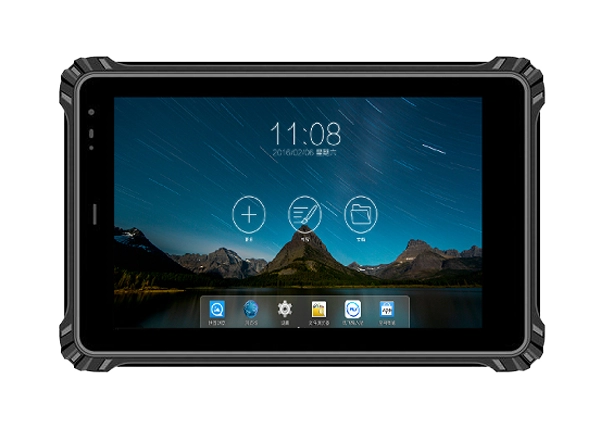
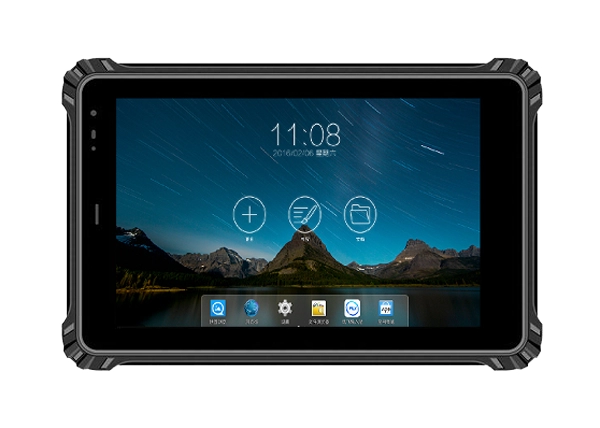
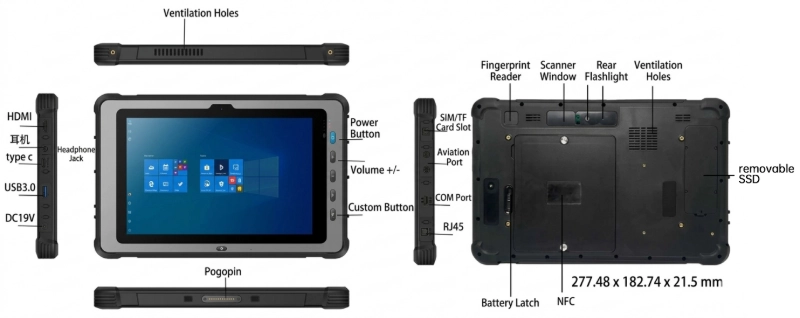
The RT-10C 10.1-inch Windows 10/11 rugged tablet combines IP67 protection, a 1.2-meter drop-test specification, a removable 10,000mAh battery, and multiple industrial interfaces. These features make it a configurable option for businesses evaluating mobile computing equipment for oilfield inspections and industrial maintenance.
IP67 is an enclosure protection rating that describes resistance to dust ingress and temporary water immersion under defined test conditions. It is based on the IP Code system specified in IEC 60529.
The first digit, 6, indicates dust-tight protection under the applicable test conditions. The second digit, 7, indicates protection against temporary immersion in water under specified laboratory conditions.
For oilfield operations, this distinction matters because dust and water are only two parts of the environmental exposure a device may face.
An IP67 rugged tablet should not automatically be treated as suitable for every oilfield hazard. The rating does not independently establish resistance to the following conditions:
1. High-pressure washing: IP67 does not mean the enclosure is rated for every high-pressure water jet or industrial washdown procedure.
2. Hydrocarbons and corrosive chemicals: The rating does not establish compatibility with crude oil, solvents, fuels, acids, or other industrial chemicals.
3. Steam exposure: Hot steam and high-temperature cleaning processes require separate equipment suitability checks.
4. Prolonged or deeper immersion: IP67 refers to temporary immersion under defined test conditions, not unlimited underwater operation.
5. Explosive atmospheres: IP67 is not an explosion-proof or hazardous-area certification.
For oil and gas operators, the practical question is whether the tablet's protection level matches the actual working environment. Routine outdoor equipment inspections have different requirements from work performed near chemical handling areas or in classified hazardous locations.
The RT-10C is specified with IP67 protection. It is suitable for consideration in field workflows where dust and water exposure are relevant, but it should not be represented as certified for explosive atmospheres unless separate applicable certification is provided.
Dust is a routine concern at many oilfield sites. Unpaved access roads, equipment yards, drilling operations, and vehicle movements can create airborne particles that settle on devices and work surfaces.
Inspection personnel may need to use a tablet while checking equipment identifiers, recording meter readings, reviewing maintenance records, or documenting the condition of exposed components.
An IP67-rated enclosure provides dust-tight protection under the applicable test conditions. Good handling practices remain important, especially around connectors and protective covers.
A regular inspection routine helps maintain the device's protective condition.
l Check protective covers and connector areas before connecting cables.
l Inspect visible seals for damage, displacement, or contamination.
l Avoid opening protective covers unnecessarily in dusty environments.
l Remove loose debris according to the manufacturer's cleaning instructions.
l Check the enclosure after a drop or other event that could affect its physical condition.
l Do not force dirt or debris into ports during cleaning.
The RT-10C provides Type-C USB 2.0 with OTG, Type-A USB 3.0, RJ45 Ethernet, Mini HDMI, RS232, a Micro SIM slot, a TF card slot, and a 12-pin Pogo Pin interface. These connections support different data-transfer, charging, and equipment-integration workflows.
For field use, cable selection and connector access should be planned according to the actual installation. Protective covers should be secured after the required connections are completed.
Rain, splashes, and wet work surfaces are common in outdoor maintenance environments. A rugged tablet may be used while inspecting pipeline supports, reviewing pump conditions, or recording equipment status in exposed locations.
The RT-10C's IP67 rating provides a defined level of protection against dust and temporary water immersion. However, the rating should not be interpreted as permission to use any cleaning method or expose the device to every industrial liquid.
Cleaning procedures should follow the manufacturer's instructions. High-pressure washing, steam cleaning, chemical immersion, and exposure to unapproved fluids should not be assumed to be acceptable.
A practical maintenance routine should include:
1. Checking the condition of protective covers and visible seals.
2. Cleaning the enclosure using approved methods.
3. Inspecting connector areas after exposure to dirt or moisture.
4. Checking the device after accidental impact or damage.
5. Recording maintenance actions as part of the equipment management process.
The maintenance interval should reflect the actual site environment, handling frequency, and manufacturer's maintenance guidance. A fixed seal-replacement interval should not be assumed unless it is specified by the manufacturer.
Temperature is another important consideration when selecting an oilfield rugged tablet. Field personnel may work in cold outdoor locations, hot equipment yards, or areas where the device is exposed to direct sunlight.
The RT-10C specifies an operating temperature range of -25°C to 60°C and a storage temperature range of -30°C to 70°C.
Temperature Item | RT-10C Specification |
Operating temperature | -25°C to 60°C |
Storage temperature | -30°C to 70°C |
The operating range describes the specified temperature conditions for device operation. Storage temperature describes the range for storage rather than active use.
A tablet mounted or placed in direct sunlight can become hotter than the surrounding air. This is particularly relevant when the device remains inside a vehicle or on an exposed work surface.
For oilfield deployment, teams should consider:
l Whether the tablet will be used in direct sunlight for extended periods.
l Whether the device is mounted near heat-producing equipment.
l Whether workers can move the tablet into a shaded area when it is not in use.
l Whether the actual operating conditions remain within the specified temperature range.
Temperature planning should consider the device itself, not only the ambient air temperature.
A field tablet needs enough battery capacity to support inspection software, screen activity, wireless communication, GPS, and other daily operations.
The RT-10C uses a removable 7.6V, 10,000mAh lithium-ion battery. The listed endurance is 12 hours under 1080P video playback with LCD brightness set to 50%.
Battery Item | Specification |
Battery capacity | 10,000mAh |
Voltage | 7.6V |
Battery type | Lithium-ion |
Battery design | Removable |
Listed endurance | 12 hours |
Playback condition | 1080P video, LCD brightness 50% |
The 12-hour figure describes the stated video playback condition. Active oilfield work can involve more demanding power usage because of GPS, mobile communication, camera operation, application processing, and higher screen brightness.
The removable battery design allows businesses to plan battery replacement as part of field-device management. A standby battery is listed as an optional accessory.
For remote sites, a battery plan should include:
l Expected device operating hours per shift.
l Availability of charging facilities.
l The number of spare batteries required.
l Battery charging and storage procedures.
l The process for replacing batteries safely.
A representative field trial is the most practical way to evaluate runtime for a specific inspection workflow.
Oilfield inspection work often takes place across locations with different network conditions. A technician may need to record equipment information, capture photographs, identify an asset location, and submit a maintenance report.
The RT-10C includes GPS based on the U-Blox M7N module, dual-band Wi-Fi, Bluetooth 5.2 BLE, and a 4G LTE configuration.
The listed 4G LTE bands are:
Network Type | Supported Bands |
LTE FDD | B1 / B3 / B5 / B7 / B8 / B20 |
LTE TDD | B38 / B40 / B41 |
WCDMA | B1 / B5 / B8 |
GSM | B3 / B8 |
Network availability depends on local carrier coverage and the selected device configuration. Businesses should compare the listed bands with the mobile networks used at the deployment site.
For remote operations, inspection software should also support the required offline workflow. Workers may need to save records locally and synchronize them when a suitable connection becomes available.
A rugged tablet for oil and gas must support the software and equipment used by the maintenance team. Hardware protection alone does not guarantee that the device can connect to an existing industrial system.
The RT-10C is listed with Windows 10 and Windows 11 operating systems. Its standard CPU options are Intel Core i5-1235U and Intel Core i7-1255U.
Computing Item | Standard | Option |
CPU | Intel Core i5-1235U / i7-1255U | — |
RAM | 16GB | 32GB |
Storage | 128GB | 256GB / 512GB / up to 2TB |
Operating system | Windows 10 / Windows 11 | Windows Home / IoT options listed |
This platform can be evaluated for Windows-based inspection applications, maintenance records, and industrial data-entry software. Application compatibility should be checked against the required Windows version, drivers, and peripheral interfaces.
The RT-10C lists several interfaces that can support different industrial workflows.
Interface | Specification |
Type-C | USB 2.0, supports OTG |
Type-A | USB 3.0 |
Ethernet | RJ45, 100/1000Mbps |
HDMI | Mini HDMI |
RS232 | 3-pin |
Pogo Pin | 12-pin, USB and charging |
CONINVERS | Optional configuration with RS232 / USB / DC5V / CAN Bus |
The 3-pin RS232 interface and optional CONINVERS configuration serve different connection requirements. A standard RS232 connection should not be treated as a CAN Bus interface.
For equipment that requires CAN Bus communication, buyers should specify the relevant optional configuration and verify connector, protocol, and software compatibility before ordering.
The 100/1000Mbps RJ45 Ethernet interface can support wired network connections where a suitable network is available. USB and Pogo Pin connections can be considered for peripherals, charging accessories, and docking workflows.
Procurement teams should review product specifications and supporting documents before approving a rugged tablet for field deployment.
The RT-10C specification lists the following certifications and supporting documents:
Item | Listed Status |
CE | OK |
RoHS 2.0 | OK |
IEC 62133 | OK |
IP67 | OK |
GMS | OK |
MSDS | OK |
UN38.3 | OK |
Air and Sea Shipping Report | OK |
These documents address different aspects of product compliance, battery safety, enclosure protection, and transport.
For example, UN38.3 is relevant to lithium battery transport testing, while IEC 62133 relates to the safety of portable sealed secondary cells and batteries. An IP67 rating describes enclosure protection under specified test conditions.
These documents should not be treated as interchangeable. They also do not establish that the device is approved for explosive atmospheres or every hazardous-area application.
For procurement, request the applicable document set and check that the model, configuration, and supplied battery match the documents.
Before purchasing an IP67 rugged tablet for oil and gas operations, review the following items:
1. Environmental exposure: Identify the expected dust, rain, water, chemical, and temperature conditions.
2. Protection requirements: Confirm that IP67 is appropriate for the intended use and review any additional hazardous-area requirements.
3. Temperature range: Compare the specified -25°C to 60°C operating range with the actual site conditions.
4. Battery planning: Evaluate the removable 10,000mAh battery and the 12-hour video playback rating against the expected workload.
5. Network compatibility: Compare the listed LTE bands with the site's mobile network coverage.
6. Software requirements: Confirm Windows version, CPU, memory, storage, and driver compatibility.
7. Industrial interfaces: Specify whether USB, Ethernet, RS232, Pogo Pin, or the optional CAN Bus configuration is required.
8. Certification documents: Review CE, RoHS 2.0, IEC 62133, IP67, UN38.3, MSDS, GMS, and transport documents as applicable.
9. Accessories: Evaluate optional hand straps, mounting brackets, standby batteries, and charging bases.
10. Maintenance process: Establish procedures for cleaning, connector inspection, battery handling, and device condition checks.
IP67 provides dust-tight protection and resistance to temporary water immersion under defined test conditions. It can be relevant to outdoor oilfield inspections, but it does not establish resistance to every chemical, high-pressure washdown, or explosive atmosphere.
The RT-10C specifies an operating temperature range of -25°C to 60°C and a storage temperature range of -30°C to 70°C.
Yes. The device uses a removable 7.6V, 10,000mAh lithium-ion battery. A standby battery is listed as an optional accessory.
The RT-10C lists USB, RJ45 Ethernet, Mini HDMI, a 3-pin RS232 interface, and a 12-pin Pogo Pin interface. An optional CONINVERS configuration includes RS232, USB, DC5V, and CAN Bus. The required interface should be specified according to the connected equipment.
The listed specification includes CE, RoHS 2.0, IEC 62133, IP67, GMS, MSDS, UN38.3, and an Air and Sea Shipping Report. These listed items do not establish explosion-proof or hazardous-area certification. Separate applicable documentation is required for classified locations.
FushiZK Technology Co., Ltd. (FUSHi TECH) is a Shenzhen-based technology enterprise established in 2021, focusing on rugged computing tablets and related solutions. Its product portfolio includes Windows and Android rugged tablets, vehicle-mounted tablets, medical rugged tablets, and other reinforced computing devices for industrial and field applications.
The company identifies embedded system development, AI algorithm optimization, and wireless communication technology as key areas of technical development. It also reports having applied for more than 50 patents and investing over 15% of annual revenue in research and development. These company-reported capabilities provide background for businesses evaluating its product development and customization offerings.
Selecting an IP67 rugged tablet for oil and gas operations requires more than checking a single protection rating. Dust, water, temperature, battery endurance, network availability, industrial interfaces, and certification documents all influence whether a device is suitable for a particular field workflow.
The RT-10C 10.1-inch Windows 10/11 Rugged Tablet combines IP67 protection, a 1.2-meter cement-floor drop-test specification, an operating range of -25°C to 60°C, a removable 10,000mAh battery, Windows 10/11 support, and configurable industrial interfaces.
For oilfield inspection, equipment maintenance, and other industrial field applications, the RT-10C provides a configurable platform that can be matched to specific software, connectivity, and interface requirements.
Contact FUSHi TECH to request the RT-10C configuration sheet and supporting documents for your deployment requirements.