 EN
EN
 English
  简体中文
简体中文  Italian
  Spanish
  Turkish
  Japanese
  Portuguese
  Russian
  French
  German
  Polish
  Persian
  Arabic
 News
Latest news, updates & insights from Fushi.
Latest news, updates & insights from Fushi.
Sep 30, 2026Source:Intelligent Browse: 2
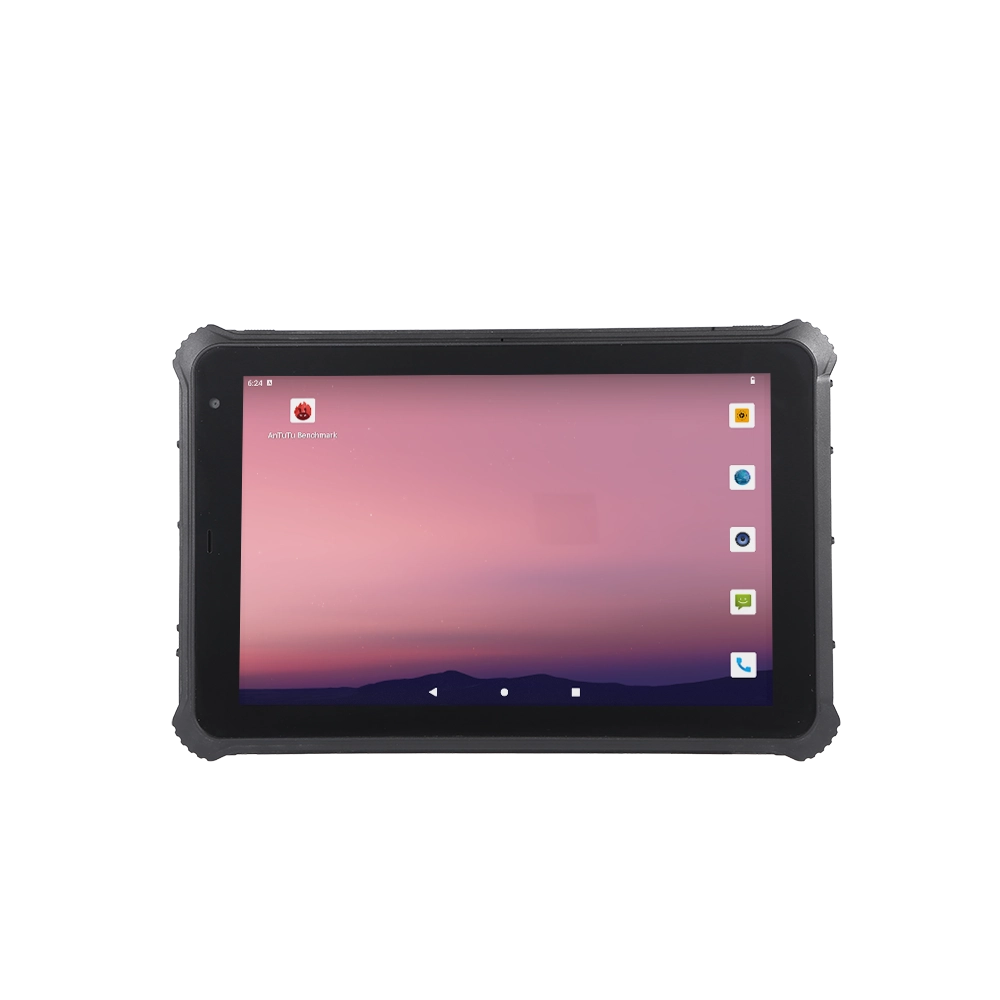
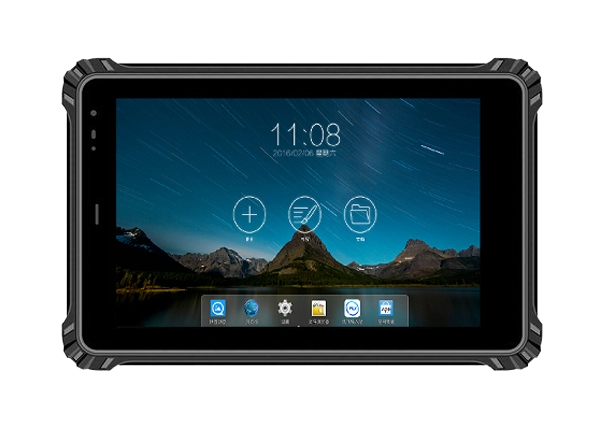
The RT-08MG combines an 8-inch Android 13 platform with optional identification, scanning, positioning, and RFID functions, allowing one rugged terminal to support different field workflows.
An Android rugged tablet becomes more useful when its hardware can match the task being performed. A technician may need to identify equipment, a warehouse operator may need to read tagged assets, and a field officer may need identity verification and document capture. These tasks require different input methods, but carrying a separate device for every function can make the workflow more complicated.
The RT-08MG addresses this requirement through a selection of optional modules. GNSS/RTK, fingerprint, NFC, HF/LF, UHF, ID card, and 1D/2D scanning functions can be configured according to the application. Combined with an 8-inch display, Android 13, wireless connectivity, cameras, and rugged protection, the tablet can serve as a configurable mobile terminal rather than a general-purpose screen.
The most practical way to configure a multi-function tablet is to begin with what workers actually need to do.
If a worker needs to identify a piece of equipment, QR scanning may be sufficient. If dozens of tagged assets must be located without approaching each item individually, UHF may be more appropriate. If a system needs to verify a person's identity, fingerprint or ID card modules can be considered. For short-range card and tag interaction, NFC or HF/LF provides another option.
This distinction matters because adding every possible function does not automatically make a device more useful. The right combination should reduce the number of steps in the workflow.
The RT-08MG provides a common Android 13 platform for these different configurations. It uses an MTK8781 eight-core processor with a 2.2 GHz main frequency and is available with 4GB + 64GB or 8GB + 128GB memory and storage configurations.
Location information is useful when a field record needs to be connected to a physical position.
The standard positioning configuration supports GPS, BeiDou, Galileo, and GLONASS, with three of the four systems supported according to the product specification. For projects requiring more precise positioning, the tablet can also be equipped with a customized GNSS or RTK module.
This can be useful in applications where a simple location coordinate is not enough. For example, inspection teams working across large facilities can associate records with specific locations, while surveying or infrastructure-related workflows may require higher positioning accuracy.
The important point is that positioning becomes part of the application workflow rather than an isolated hardware function. A worker can collect information, record images, enter inspection results, and associate the record with location information on the same device.
Some mobile workflows require the device to establish who is performing an operation before information can be processed.
The RT-08MG supports several fingerprint configurations, including standard fingerprint, public security fingerprint, and FBI fingerprint options. It also supports a built-in second-generation offline ID card module.
These options can be useful for applications involving personnel registration, identity verification, controlled access, or field services where an individual's identity needs to be associated with a record.
For example, a mobile service application could verify the operator before allowing a work order to be completed. A registration workflow could read an ID card and then use the retrieved information within the Android application.
The benefit is not simply having a fingerprint reader or card reader. The greater value comes from integrating identity verification into the same terminal that handles the rest of the application.
NFC and HF/LF functions are useful when the identification point is close to the device.
The optional module supports 14443A, 14443B, 15693, and 125K standards, with customized modules available for specific requirements. This provides several options for working with compatible cards, tags, and identification systems.
A practical example is equipment inspection. An NFC or compatible tag can be attached to a machine, cabinet, or other asset. When the technician arrives, the tag can be read and the corresponding equipment record can be opened in the application.
This approach can make the workflow more controlled than relying entirely on manually entered equipment numbers. It can also help reduce confusion when several similar assets are located close together.
UHF serves a different purpose from NFC because it can support longer-distance tag reading.
The RT-08MG offers embedded UHF options based on the PR9200 and R2000 platforms. The stated reading distances are approximately 3–5 meters for the PR9200 configuration and 10–15 meters for the R2000 configuration. Actual results depend on tag design, antenna configuration, surrounding materials, and the deployment environment.
This makes UHF particularly relevant to asset and inventory workflows.
Imagine an operator checking tagged equipment in a storage area. Instead of physically locating and scanning every individual item, the operator can use a suitable UHF configuration to identify compatible tags from a greater distance. The collected data can then be processed by the Android application.
For warehouses, equipment rooms, production areas, and asset management projects, this can change the way information is collected. The tablet is no longer simply displaying a database; it becomes part of the physical identification process.
Not every identification task requires RFID. QR codes and barcodes remain practical because they are inexpensive to deploy and easy to associate with existing software systems.
The RT-08MG supports optional 1D/2D QR code scanning modules and customized scanning modules for other requirements.
A maintenance technician, for example, could scan a QR code attached to a machine, retrieve its maintenance history, record inspection results, take photographs, and submit the report without changing devices.
The 8-inch screen is also useful here. Compared with a smaller scanning terminal, it provides more space for displaying equipment information, forms, instructions, and photographs while the worker completes the task.
The real advantage of a modular rugged tablet appears when several functions are used within one application workflow.
Consider a vehicle inspection scenario. A worker could use an identification tag to confirm the vehicle, use the camera to document its condition, use GNSS to associate the inspection with a location, and submit the completed record through a cellular or WiFi connection.
In another project, UHF could identify several tagged assets, while a fingerprint module confirms the operator's identity. For a service application, QR scanning could identify the equipment and NFC could provide an additional identification method.
Android 13 provides the software environment for these applications, while the MTK8781 processor provides the computing platform. The 8GB + 128GB configuration can also provide more room for applications and local data than the 4GB + 64GB option.
Optional modules are only one part of a multi-function terminal. The device also needs interfaces for connecting to surrounding equipment.
The RT-08MG provides USB-A and USB-C interfaces, a 100 Mbps network port, a 12-pin Pogo Pin, SIM card slot, TF card slot, audio interface, and DC input. The TF card slot supports up to 1TB of additional storage.
The 12-pin Pogo Pin is particularly relevant for customized terminal configurations where the tablet needs to work with a dedicated dock or accessory. USB can provide another connection method for compatible peripherals, while the network interface can be useful in fixed or semi-fixed deployments.
The product also includes a 5MP front camera and 13MP rear autofocus camera with LED light, allowing photographs to become part of inspection, identification, or service records.
The modular configuration would have limited value if the tablet were only suitable for controlled indoor environments.
The RT-08MG uses a dual-color molded housing with IP67 protection. It is specified for operation from -20°C to 60°C, with storage from -30°C to 70°C. The tablet is also rated for a 1.2-meter drop onto a composite wood floor and lists MIL-STD-810H among its certifications.
Its 8-inch display is available with 800 × 1280 or 1200 × 1920 resolution, with 500, 800, and 1000-nit brightness options. The 10-point capacitive touch panel has 7H hardness, with options for anti-glare, glove, and wet-hand touch.
These characteristics matter when the device is used for inspection, transportation, automation, medical, energy, or outdoor tasks where the operating environment is less predictable than an office.
The main benefit of the RT-08MG is its ability to start with a common rugged Android platform and then add functions around a specific workflow.
One project may need QR scanning and GNSS. Another may require UHF and NFC. A security-related application may prioritize fingerprint and ID card functions. An equipment management system may combine RFID, camera capture, location, and wireless communication.
This flexibility is also consistent with the development approach of Fushizk Technology Co., Ltd., which focuses on rugged computing tablets and combines embedded system development, AI algorithm optimization, and wireless communication technology. The company has applied for more than 50 patents and reports annual R&D investment above 15%.
For system integrators and project developers, the important question is therefore not how many modules a rugged tablet can support. It is whether the available functions can be selected and combined to remove unnecessary steps from the actual workflow. With its Android 13 platform, rugged enclosure, multiple interfaces, and range of optional identification and data-collection modules, the RT-08MGprovides a practical hardware base for building that type of multi-function field terminal.