 EN
 English
 简体中文
 Italian
 Spanish
 Turkish
 Japanese
 Portuguese
 Russian
 French
 German
 Polish
 Persian
 Arabic
News
Latest news, updates & insights from Fushi.
Latest news, updates & insights from Fushi.
Nov 18, 2026Source:Intelligent Browse: 0
Industrial computing rarely operates in isolation. In manufacturing facilities, energy installations, vehicle systems and outdoor inspection environments, mobile computers often need to communicate with external equipment, transfer operational data and interact with different types of industrial peripherals. A tablet may need to connect to a wired network, display information on an external monitor, communicate with wireless devices or collect identification data from RFID equipment.
For these applications, the operating system is only one part of the solution. Physical interfaces, communication compatibility, processing capability and hardware reliability also influence how easily a tablet can be integrated into an existing workflow.
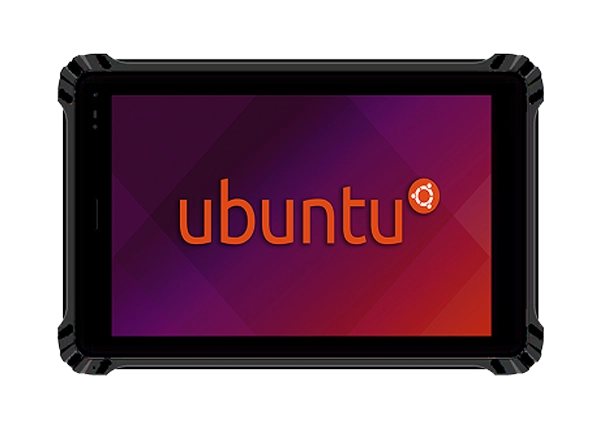
The RT-10U 10-inch Ubuntu 22.04 Rugged Tablet is designed for these requirements. Powered by an Intel Celeron N5100 processor and equipped with Ethernet, USB, Micro HDMI, Wi-Fi, Bluetooth and optional cellular communication, it provides a portable computing platform for industrial applications. For buyers evaluating a rugged tablet factory, understanding how these interfaces work together is also an important part of assessing the manufacturer's product development and customization capabilities.
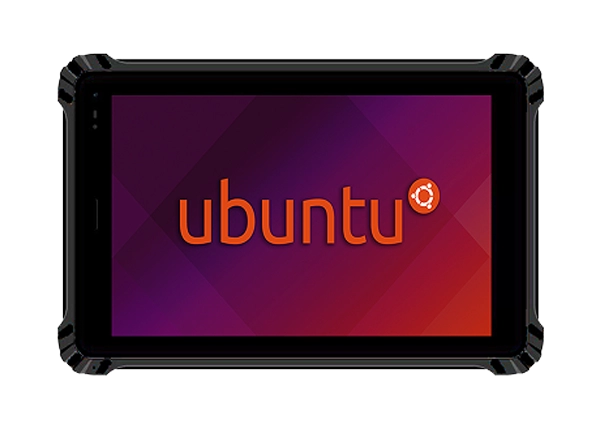
Industrial tablets frequently serve as mobile interfaces between workers, equipment and information systems. Depending on the application, they may need to communicate with barcode scanners, external displays, network devices, identification modules or specialized monitoring equipment.
Ubuntu 22.04 provides a Linux-based operating environment for industrial software deployment and application development. However, peripheral integration still depends on several practical factors:
· Interface availability: The tablet needs suitable physical ports or wireless communication capabilities for the connected equipment.
· Driver compatibility: External devices must have compatible drivers and software support for the operating system.
· Data communication: Applications need appropriate protocols and interfaces to exchange information with connected equipment.
· Power requirements: External peripherals may require additional power or dedicated power arrangements.
· Environmental reliability: Connections and devices must remain suitable for the intended working environment.
These considerations are particularly relevant in automation, equipment maintenance and industrial data collection. A tablet with a suitable combination of interfaces can reduce the need for additional adapters and help simplify the deployment process.
Wireless communication is convenient, but wired interfaces remain important in industrial environments where stable connections, predictable data transmission or direct equipment integration are required.
The RT-10U provides several physical interfaces that support different connection scenarios.
Ethernet Connectivity
The integrated 100Mbps Ethernet port provides a wired network connection for applications that operate within factory LAN environments or other fixed network infrastructures.
For example, a maintenance technician may use a rugged tablet to access equipment records, communicate with an industrial server or retrieve information from a network-connected system. A wired connection can also be useful during software configuration and troubleshooting when wireless access is restricted.
USB Type-A and Type-C
The tablet includes one USB 2.0 Type-A port and one USB 2.0 Type-C port. These interfaces can support compatible peripherals such as storage devices, input equipment and selected industrial accessories.
Before deployment, users should verify the peripheral's operating system compatibility, USB communication requirements and power consumption. Not every industrial device will work automatically with Ubuntu, even when the physical connector is compatible.
Micro HDMI Output
The Micro HDMI interface provides an option for connecting an external display. This can be useful when technicians need a larger viewing area for equipment diagrams, operational information or application interfaces.
For industrial system integrators, these wired interfaces offer practical connection options without requiring every peripheral to communicate wirelessly.
Not every application provides convenient access to wired network connections. Field workers, vehicle operators and outdoor inspection teams often need communication capabilities that support mobility.
The RT-10U supports several wireless communication options, including Wi-Fi, Bluetooth 5.1 and GPS. Optional 4G or 5G communication can also be configured according to project requirements.
Its Wi-Fi specification supports IEEE 802.11a/b/g/n/ac across 2.4GHz and 5.8GHz frequency bands. This allows the tablet to connect to compatible wireless networks in offices, workshops and other deployment environments.
Bluetooth 5.1 with BLE support provides another connection option for compatible wireless accessories. The specified Class 1 transfer distance is 10 meters under applicable conditions, although actual communication range depends on the surrounding environment and connected equipment.
GPS support is useful for applications involving location records, vehicle operations and outdoor inspection. When combined with optional cellular connectivity, the tablet can support mobile information access and location-related workflows.
For procurement teams, it is important to confirm which communication modules are included in the selected configuration. Cellular connectivity and other optional modules should be specified before production rather than assumed to be standard equipment.
Some industrial workflows require more than basic data communication. Equipment identification, personnel verification and inventory management may involve specialized modules that extend the functionality of a mobile terminal.
The RT-10U supports several optional configurations:
Optional Module | Supported Functions | Potential Applications |
RFID | 14443A, 14443B, 15693 and 125K low-frequency support | Asset identification and inventory |
NFC and HF/LF | Multiple identification protocols | Access-related applications and information reading |
Fingerprint | Standard, customized public security and FBI fingerprint modules | Identity verification |
Barcode Scanner | 1D and 2D scanning modules | Product identification and data entry |
4G/5G | Optional cellular communication | Mobile network access |
These configurations can help businesses adapt a tablet to specific operational requirements.
For example, warehouse personnel may use compatible scanning or RFID modules to identify products and equipment. Public safety applications may require specialized fingerprint configurations, while field service teams may prioritize cellular communication and GPS.
Module selection should be based on the actual application, supported protocols and Ubuntu software compatibility. Hardware availability alone does not guarantee that every optional module will work with every third-party application.
Peripheral connectivity is only useful when the tablet has sufficient computing resources to support the intended software and data operations.
The RT-10U uses an Intel Celeron N5100 processor with four cores and four threads, operating at 2.20GHz to 2.80GHz. It is designed for portable computing tasks where users need to run compatible industrial applications, manage operational information and communicate with connected devices.
Available memory and storage configurations include:
· 8GB RAM + 128GB storage
· 16GB RAM + 128GB storage
· 16GB RAM + 256GB storage
The tablet also supports TF card expansion up to 1TB.
The appropriate configuration depends on the software workload. A terminal mainly used for equipment information lookup may have different memory and storage requirements from one running multiple applications or managing larger local datasets.
For developers and system integrators, the combination of Ubuntu 22.04 and the N5100 platform provides a basis for evaluating application compatibility, peripheral communication and deployment requirements before purchasing devices in volume.
A portable industrial computer needs to handle more than software and connectivity requirements. Its physical construction must also suit the working environment.
The RT-10U features an IP67 protection rating and a dual-color molded housing option. It is specified for operating temperatures from -20°C to 60°C, with storage temperatures ranging from -30°C to 70°C. The device also has a specified 1.2-meter drop resistance test on a composite wooden floor.
Its 10-inch LCD display offers a standard resolution of 800 × 1280, with an optional 1200 × 1920 configuration. Standard brightness is 500 nits, while 800-nit and 1000-nit options are available for applications requiring improved visibility under bright conditions.
Additional hardware specifications include a 10-point touch panel with 7H hardness and front 5MP and rear 8MP cameras.
The built-in 7.6V, 6000mAh polymer lithium-ion battery provides a specified runtime of approximately eight hours under the manufacturer's test conditions: 50% volume while playing 1080P local high-resolution video. Actual runtime will vary according to screen brightness, wireless communication, application workload and peripheral usage.
These characteristics make the device suitable for evaluation in manufacturing, oil and gas, vehicle applications, outdoor patrol and other mobile industrial environments. Actual deployment suitability should be confirmed against the project's environmental and certification requirements.
For B2B buyers, selecting an industrial tablet is also a manufacturing and integration decision. A product specification sheet provides useful information, but it does not fully explain how a supplier handles customization, engineering changes or production consistency.
When evaluating a rugged tablet factory, procurement teams should consider several areas.
First, examine the manufacturer's technical development capabilities. Industrial projects may require different operating systems, communication modules, interface combinations or housing configurations. A manufacturer with in-house R&D resources can provide more direct technical coordination during product evaluation.
Second, review the production and quality control process. Assembly accuracy, connector installation, inspection procedures and finished-product testing all influence the consistency of delivered equipment.
Third, confirm the availability of customization options. Different industries may require specific memory configurations, fingerprint modules, RFID functions, cellular communication or display specifications. Buyers should clarify whether these options can be integrated into the selected model.
Finally, evaluate the manufacturer's experience in supporting industrial applications. A supplier familiar with automation, transportation, energy systems and outdoor inspection is more likely to understand the practical requirements involved in deploying rugged computing equipment.
Fushizk Technology Co., Ltd. was established in 2021 and is headquartered in Shenzhen, China. The company integrates research and development, production and sales, specializing in rugged computing tablets and customized industrial computing solutions.
Its product portfolio includes 8-inch and 10-inch Android rugged tablets, Windows rugged tablets, explosion-proof rugged tablets, vehicle-mounted tablets, medical rugged tablets and military-grade reinforced tablets.
The company's technical development focuses on three core areas: embedded system development, AI algorithm optimization and wireless communication technology. It has applied for more than 50 patents, with annual R&D investment exceeding 15% of its revenue. R&D personnel account for approximately 30% of its workforce.
For customers sourcing from a rugged tablet factory, these capabilities are relevant to projects involving operating system configurations, peripheral integration and customized hardware requirements.
Fushizk also reports an established service and distribution network, including more than 70 distribution partners, over 1,000 service outlets, more than 30 industry qualification certificates and a supplier network of over 500 cooperative partners.
This combination of product development and manufacturing resources supports its work across factory automation, mechanical automation, measurement equipment, environmental monitoring, medical devices, transportation, power systems and IoT applications.
Industrial tablet selection should begin with the equipment and software that need to work together. Buyers should identify the required interfaces, communication protocols, operating system compatibility, processing resources and environmental conditions before finalizing a hardware configuration.
The RT-10U Ubuntu 22.04 Rugged Tablet combines an Intel Celeron N5100 processor with Ethernet, USB, Micro HDMI, Wi-Fi, Bluetooth and optional 4G/5G connectivity. Its expandable configuration options and additional identification modules provide flexibility for different industrial projects.
For companies evaluating a rugged tablet factory for OEM or customized procurement, Fushizk Technology offers rugged computing products supported by dedicated R&D and manufacturing capabilities.
By sharing the intended application, peripheral list, operating system requirements and preferred hardware configuration at the beginning of a project, buyers can make the integration process more efficient and identify a suitable rugged tablet solution for their industrial operations.