 EN
EN
 English
  简体中文
简体中文  Italian
  Spanish
  Turkish
  Japanese
  Portuguese
  Russian
  French
  German
  Polish
  Persian
  Arabic
 News
Latest news, updates & insights from Fushi.
Latest news, updates & insights from Fushi.
Jun 17, 2026Source:Intelligent Browse: 3
For decades, traditional two-way radios have been the standard communication tool for security teams, construction sites, manufacturing facilities, and emergency response organizations. Their simplicity and reliability made them indispensable in many industries. However, as businesses become more connected and mobile, communication needs have evolved beyond the limitations of conventional radio systems.
The introduction of 4G Push-to-Talk over Cellular (PoC) technology has transformed professional communication by enabling nationwide coverage, faster data transmission, and seamless connectivity. Devices such as the L611 4G Fully Rugged Walkie Talkie combine traditional voice communication with modern cellular networking, offering a more flexible solution for today’s field operations.
So, what exactly separates a 4G rugged walkie talkie from a conventional two-way radio? Let’s take a closer look.
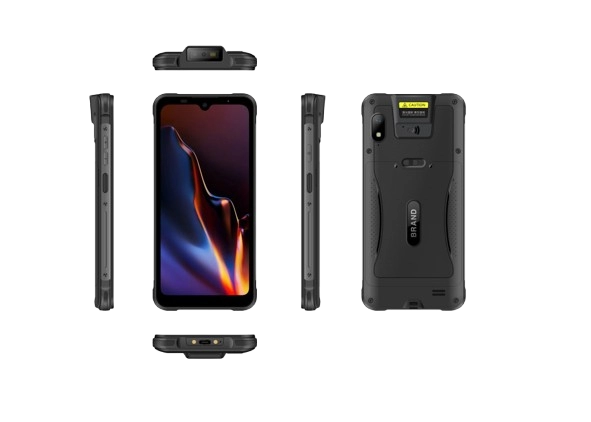
Traditional two-way radios operate on dedicated radio frequencies such as UHF or VHF. Communication occurs directly between radios or through repeaters that extend signal coverage.
These devices are widely used because they provide:
· Instant push-to-talk communication
· Simple operation
· Reliable voice transmission
· Independence from public cellular networks
However, their performance is limited by radio coverage, terrain, and infrastructure. When users move outside the coverage area, communication becomes difficult or impossible.
A 4G walkie talkie combines the familiar push-to-talk experience with the coverage of modern LTE cellular networks.
Instead of relying only on radio frequencies, voice communication is transmitted through 4G mobile networks, allowing users to communicate across cities, regions, or even countries where cellular service is available.
The L611 supports multiple communication standards, including:
· LTE CAT4 with download speeds up to 150 Mbps and upload speeds up to 50 Mbps
· WCDMA
· TD-SCDMA
· GSM
· GPRS
· EDGE
This wide compatibility allows the device to operate across diverse mobile network environments while maintaining stable communication.
Coverage is often the first factor organizations consider.
Traditional radios are generally limited to:
· Job sites
· Buildings
· Industrial facilities
· Local operating areas
Coverage depends on antenna height, repeater installation, and environmental conditions.
Because communication is carried through LTE networks, users can stay connected wherever cellular coverage exists.
This makes the device especially useful for:
· Logistics companies
· Transportation fleets
· Field maintenance teams
· Utility companies
· Multi-city security operations
Teams no longer need to remain within the range of a single radio system.
Clear voice communication is critical in professional environments.
Traditional radios may experience interference caused by:
· Buildings
· Mountains
· Electrical equipment
· Long communication distances
A 4G communication system provides more stable voice quality by utilizing modern digital cellular infrastructure.
For organizations operating across large geographical areas, this can significantly improve communication reliability.
Traditional two-way radios mainly support voice communication.
Modern rugged 4G devices provide much more.
Depending on deployment, they may support:
· Voice communication
· Mobile data transmission
· GPS positioning
· Multimedia communication
· Application integration
· Remote management
This allows organizations to connect workers not only by voice but also through digital workflows.
Industrial users require equipment capable of surviving demanding working conditions.
Construction sites, warehouses, mines, ports, and outdoor operations expose communication devices to dust, vibration, impacts, and changing weather.
A fully rugged device is designed to withstand these environments while maintaining reliable operation.
Compared with consumer smartphones, rugged walkie talkies are better suited for long-term industrial use.
Building a traditional radio network often requires:
· Frequency licensing
· Base stations
· Repeaters
· Infrastructure maintenance
Expanding the network can require significant planning and investment.
A 4G walkie talkie can often be deployed much faster because it leverages existing cellular infrastructure.
Organizations can scale communication simply by adding additional devices.
As digital transformation accelerates, many industries are replacing or supplementing conventional radios with cellular communication devices.
Typical applications include:
Drivers, dispatchers, and warehouse personnel can communicate in real time across long distances.
Security teams can coordinate personnel working across multiple locations without worrying about radio coverage limitations.
Large factories benefit from continuous communication between production, maintenance, and warehouse departments.
Engineers working at customer locations remain connected with headquarters through nationwide cellular coverage.
Electricity, water, and telecommunications maintenance teams can coordinate emergency repairs more efficiently.
Selecting a professional communication solution depends on operational requirements.
Questions to consider include:
· How large is the operating area?
· Will employees travel between cities?
· Is nationwide communication required?
· Are mobile data services needed?
· Will future digital applications be integrated?
Organizations expecting future growth often prefer solutions that combine voice communication with data capabilities.
Reliable communication begins with reliable technology.
FUSHi TECH focuses on industrial control solutions designed to empower intelligent industries. Guided by its vision of “Focus on Industrial Control, Empower Intelligent Future,” the company develops products that help businesses improve operational efficiency through dependable communication technologies.
The L611 4G Fully Rugged Walkie Talkie reflects this commitment by combining robust hardware with advanced cellular communication capabilities. Supporting LTE CAT4, WCDMA, TD-SCDMA, GSM, GPRS, and EDGE networks, the device provides flexible deployment options for organizations operating in diverse communication environments.
Whether used in logistics, manufacturing, utilities, public safety, or field services, FUSHi TECH products are designed to deliver reliable performance in demanding industrial applications.
Traditional two-way radios continue to play an important role in many local communication scenarios. However, organizations operating across larger geographic areas increasingly require broader coverage, greater flexibility, and more advanced communication capabilities.
The L611 4G Fully Rugged Walkie Talkie combines the simplicity of push-to-talk communication with the advantages of modern LTE networks, enabling reliable communication over much wider areas while supporting future digital transformation.
For businesses seeking to improve workforce coordination, expand operational coverage, and prepare for intelligent field operations, upgrading from conventional radio systems to 4G rugged communication devices represents a practical step toward more efficient and connected operations.